Thursday, January 21, 2010

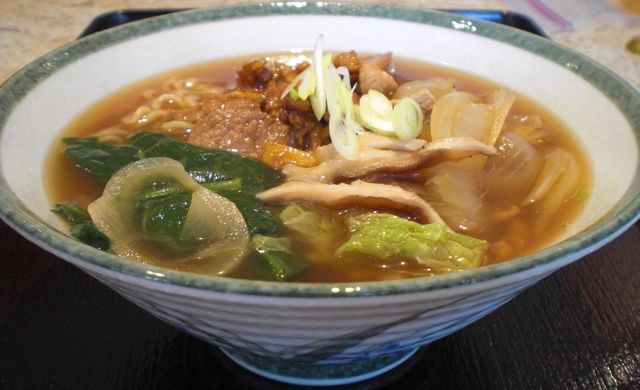
Ramen noodle ラーメン

Ramen is now popular all over the world. Although it originated from China, Japanese really developed it into their own and now, I hear that Japanese-style ramen is popularized even in China. Especially after the invention of the "instant" and "cup" ramen, it became one of the very popular late night snacks in addition to lunches in Japan as well as in the world. Many people are really into it, as you could see in the old classic movie, Junzo Itami's "Tampopo" and more recently, a Hollywood ramen movie, "Ramen Girl". I am originally from Sapporo 札幌 and ramen noodles from Sapporo have been famous in Japan for some time. In my college days, we often stopped at the original "Ramen alley" ラーメン横町 in Susukino すすきの after bar hopping and drinking. Many serious individuals as well as chain ramen restaurants have developed in Japan since then, even here in the U.S., especially in New York and Los Angeles. Many regional ramen dishes also have developed and "instant" ramens have become more sophisticated and gourmet. 

I just made this ramen noodles out of whatever was in our refrigerator and dried ramen noodles that I had (I already mentioned that I like frozen "raw" noodles from the Nishiyama seimen the best). This is not the usual way I make Ramen especially since I often make "Yakibuta" 焼豚 or Sino-Japanese pot roast of pork, separately and ahead of time. I use "Yakibuta" slices as a topping for the Ramen noodle as is often done. But I had only uncooked pork and this is how I made it this time.

I used one serving of dried noodles for two small servings. I had the trimmings of a pork tenderloin which I just sliced very thinly (whatever amount). I also used onion (1 small), "nappa" Chinese cabbage (2 leaves), fresh shiitake mushroom (3-4 small), baby spinach (1 small handful), and thinly sliced scallion for garnish (2, white part only). You could use any vegetables and proteins you may have. I minced ginger (1/4 tsp) and garlic (1 clove) and sautéed in a sauce pan in a small amount of vegetable oil (2 tsp) and a dash of roasted sesame oil for 30 seconds. I added the pork slices until the color turns white. Before garlic burns, I added mirin (1 tbs) and soy sauce (1 tbs) and braise until the meat is cooked and liquid is almost all gone. Remove the meat from the pan and set aside. In the same pan, I add vegetable oil (2 tsp) and sauteed sliced onion and thinly cut white bottom part of the nappa cabbage. Brown bits or "fond" will accumulate on the bottom and the side of the pan because of the sugar in the mirin and in the onion. After the vegetables wilt, I de-glaze with Chicken broth (I used low-fat, low-sodium Swanson chiken broth in a box), add more both (about 200ml) and 100ml of water (amount of the water depends on the saltiness of broth). I then add sliced shiitake and green part soft parts of nappa cabbage and simmer for few minutes. I add spinach which will wilt in 30 seconds. There should be enough saltiness but taste and adjust by adding soy sauce. Meanwhile I cook the noodle for 3-4 minutes to desired doneness, drain and place it in the bowls. Pour the broth in the bowls leaving the vegetables in the pan. Then I arrange the pork, vegetables, and garnish with scallion and cracked pepper. The color of broth is mostly coming from de-glazing. This is a rather healthy version of Ramen but it is not bad for a quick dish.

We usually do not like to use "seasoning packets" that come with gourmet instant ramen noodles, since it often contains a large amount of animal fat as well as salt. Fortunately you could just buy noodles either dry (not pre-deep fried) or raw "frozen".

Tuesday, January 19, 2010

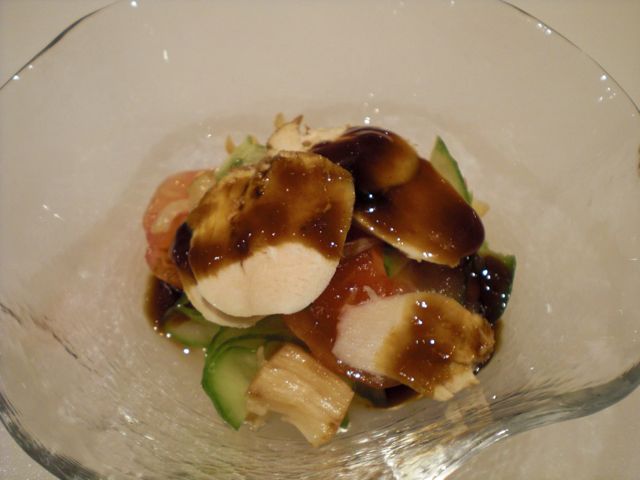
Cucumber salad with smoked scallop and poached chicken breast with black vinegar sauce きゅうり、貝柱、鶏肉のサラダの黒酢ソース和え


This is another small dish you make from whatever you have at hand. Since at our Home Izakaya, I usually make one dish, eat that dish with some sake and then make another, sometimes, making a small dish quickly from nothing is very necessary. In any case, this night, I found leftover poached chicken breast in black vinegar sauce, fresh American mini-cucumber and the New Year care package we just received from my mother which included semi-dried lightly smoked Hokkaido scallops 貝柱の薫油漬. Of course, you could omit the scallops or substitute with finely chopped smoked ham or salami.

For two small servings, thinly slice one mini-cucumber and salt lightly, mixing well or "knead" lightly and let it stand for 5 minutes on the cutting board. Then, squeeze out excess moisture. I also skinned and cut 2 Campari tomatoes into quarters. I crumbled one semi-dry scallop into small pieces and mixed the pieces into the cucumber and tomatoes then dressed with sushi vinegar. I sliced the chicken breast paper thin, placed the slices on top of the cucumbers and drizzled the black vinegar sauce over everything.

It is interesting that the black vinegar sauce congealed to a thicker gelatinous consistency since it contains protein/collagen from the chicken skin. When I was growing up in Sapporo, even inside our old house, it got very cold in winter especially at night without any source of heat. When my mother made a simmered fish dish in soy sauce flavored broth or "nizakana" 煮魚 and the leftover was kept in a kitchen cabinet, the sauce congealed in the bottom of the plate into jello next morning. This is called "nikogori" 煮凝り. It is a natural equivalent of making a fashionable "gelée" sauce by adding gelatin into a sauce. In any case, as a child, I really liked this "nikogori" on hot rice (it melted quickly). The reduced black vinegar sauce indeed attained a similar consistency (in the refrigerator not in the room, though). This dish is definitely best with sake, since it has a vinegary taste.

Monday, January 18, 2010

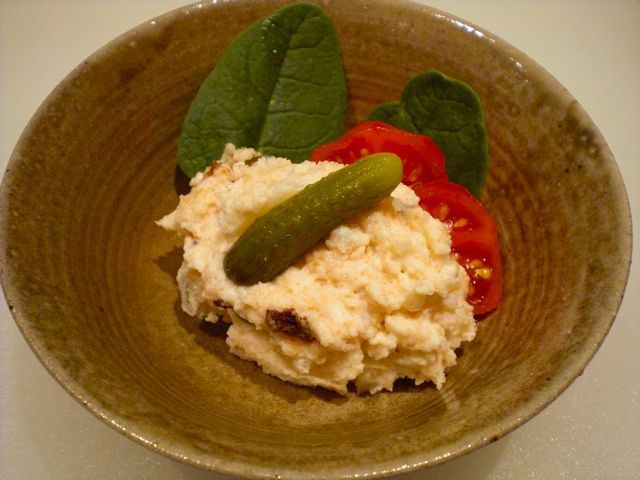
Potato salad with cod roe, black olive and Cornichons タラモサラダ

Potato salad is not really Japanese or Izakaya food, yet, it is definitely very common home cooked food in Japan. Last time we were in one of our favarite Izakayas in Kyoto, "Akagakiya" 赤垣屋, the first appetizer or "Otoshi" おとうし was potato salad which was excellent. There is always something different from usual American-style potato salad in Japanese versions. Mark's book has a rather sophisticated version of potato salad (p81).  One of more common Japanese variations is called "taramo" which is a made-up word from "tara-ko" (cod roe) and "imo" (potato). I made my variation of "taramo" salad since I had "tarako" I did not use after making other dishes. I added black olive, finely sliced French Cornichons (tiny cucumbers, gherkins, pickled in a tangy marinade), and instead of using just mayonnaise, I used an equal mixture of plain yogurt and mayonnaise, which is bit better fat-wise and also add a slighly sour tangy flavor to the dish. An addition of yogurt, however, makes the salad a bit watery, so it is important to use white potatoes and cook them whole and remove the skin before mashing to make sure the potato is rather dry to begin with.

I used two large white potatoes which were boiled in salted water whole (you could microwave, also) until a skewer goes through easily. Remove skin using a towel and mash with 1 tbs of butter and a pinch of salt (be light on salt since "tarako" is also salty) and let it cool to a room temperature. Meanwhile I remove the pits from 7-8 black oil cured olives (I am not sure which kind we got here from a local gourmet grocery store) and coarsely chop. I usually use thinly sliced fresh cucumbers (salted and then vinegared) but the mini-cucumbers we got this time did not taste particularly good, so I used pickled French Cornichons finely sliced (4-5). Add 2 tbs each of mayonnaise and plain yogurt and one large sac of tarako (which was removed from the sac and mixed with 1 tsp of lemon juice and 1/2 tsp of sake). Taste and adjust the seasoning (salt and pepper). This "taramo" salad tastes better after leaving it overnight in the refrigerator (especially the textures improves).

Please note that the size of Cornichons I used for a garnish is only 1 inch in length and the tomato is cherry tomato in the above picture. I served this as an "otoshi" for our Home Izakaya à la "Akagaki-ya". Although sake will be a safe choice, It went surprisingly well with an inexpensive everyday Australian Shiraz "Red Dust" 2007.

Saturday, January 16, 2010

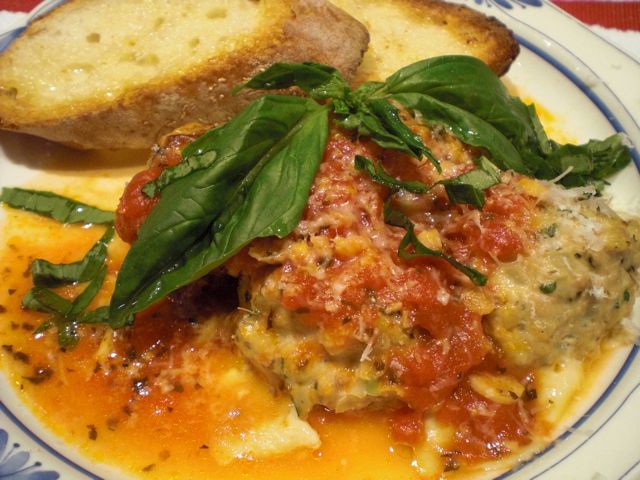
Chicken meatball with marinara sauce チキンミートボール


This may not be strictly Izakaya food but it goes perfectly well with a glass of red wine. This is rather low fat version of Italian meat balls with a marinara sauce but it has very light texture and tastes pretty good. I am not sure where I came up with this particular recipe but I may have seen it in one of the Food Channel shows at some time and modified it.

It starts with ground chicken. I used low fat (less than 1% fat) but you could use raw Italian sausage or ground pork if you are so inclined. For one package of ground chicken (1 lb or about 500 grams), I add 1 medium onion and 4-5 fresh shiitake mushrooms chopped and sauteed in olive oil and cooled, 1/2 tsp or more of freshly ground nutmeg (this is the most important seasoning, freshly ground nutmeg has much better flavor than the pre-ground), 1 tsp of salt and 1/2 tsp of freshly ground black pepper, and 1/2 cup of Japanses "panko" bread crumbs, and 2 beaten eggs. You could also add ground cayenne pepper to taste (optional). Mixed them all up using your hand until the mixture comes together. You may want to reserve a portion of the beaten eggs first and adding the rest depending on the consistency but I like it rather soft with 2 eggs. Using a small ice cream scoop to make small equal sized meat balls and I place them on a cookie sheet. Put them in a 350F oven for 15 minutes or until done. You could sauté or deep fry the meat ball but baking works best for us.

For the marinara sauce, I just use 1/3 cup of light olive oil, two 8 oz cans of whole plum tomatoes (crushed by hand), and chopped garlic (3-4 gloves), 2 bay leaves, salt, black pepper, 1/2 tsp of dried oregano or marjoram, and 1/2 of dried basel, 1/2 to 1 tbs of sugar (to cut acidity). Again you could add red pepper flakes with garlic if you so prefer.

I add chiffonade of fresh basel and grated Parmigiano-Reggiano cheese when serving with an accompaniment of toasted baguette.

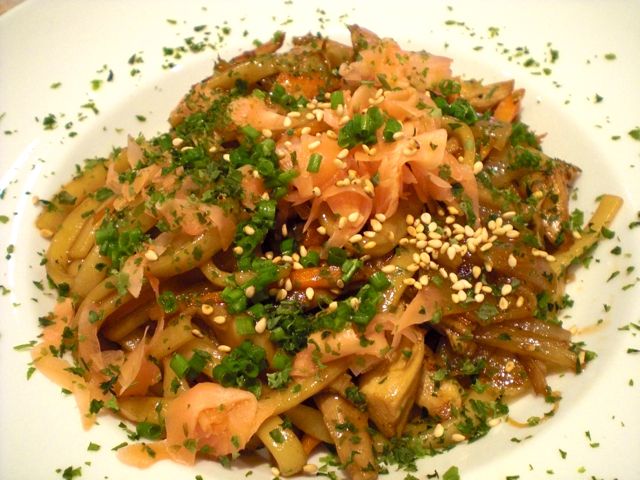
Stir fried udon noodle 焼うどん

This is another "teiban" shime dish. At home, I make this usually from leftovers. The night before, I made "Tarako spaghetti" using a Japanese "Udon" noodles and I had leftover udon. I also had the last small portion of the leftover barbecued chicken (thigh meat). This is a variation of "Yakisoba" 焼きそば.

For two small servings, I sliced onion (1, small), julienned carrot (1, small) and fresh shiitake mushrooms (4, medium). I sautéed these vegetables in olive oil (1 tbs) with a dash of dark sesame oil for 2-3 minutes and added crushed, finely chopped garlic (1 clove). Seasoned with salt and pepper. I then added hand shredded cooked chicken thigh (one thigh) and the noodles. It is important to add some kind of liquid during the cooking of this kind of dish. I added chicken broth (3 tbs) and stirred until the liquid was almost all gone. You could use a bottled "yakisoba" sauce, but I just seasoned it with mirin (2 tbs), soy sauce (1 tbs) and Worcestershire sauce (2 tsp), salt and pepper. You can experiment with any combination of sauces. I stir-fried until the liquid was almost gone and the sauce became somewhat thick and clingy. For garnish, I had thinly sliced pickled ginger root (pink stuff you get at Sushi bars), chopped chives, dried "aonori"  and roasted white sesame seeds. Very familiar dish and good.