Tuesday, July 13, 2010

Grilled squid with lemon and thyme レモン、タイム味のイカ焼き

This is a type of dish that sounded great in concept but had some problems in execution. I did not follow any particular recipe but thought that having thyme and lemon flavoured grilled small squid would be a nice appetizer.
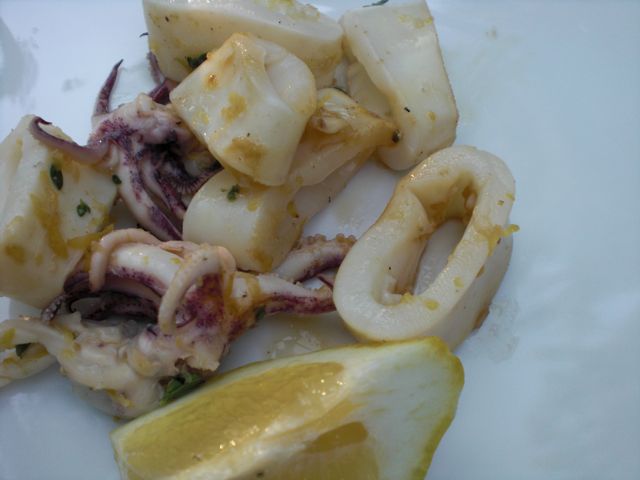
 
The type of squid I can consistently get here is a small pre-cleaned (previously frozen) kind which tend to be loaded with water (They must absorb water during the preparation process). I had too-much-liquid-coming-out-of-the-squid problem before.
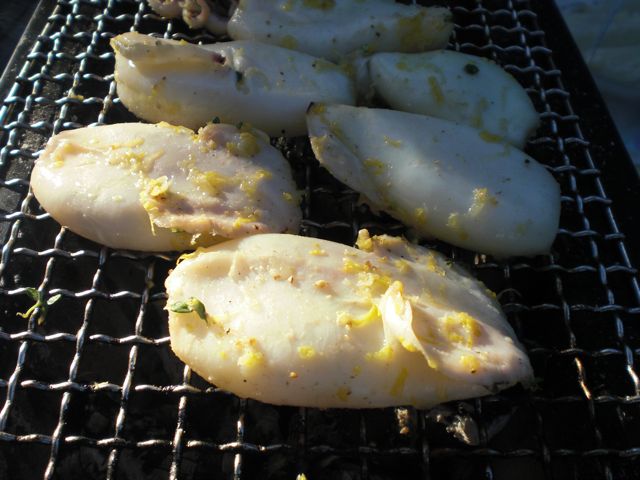
 
I marinated the squid in olive oil, lemon juice, grated lemon zest and fresh thyme, salt and freshly cracked white pepper for several hours in the refrigerator. I grilled the squid on a very hot charcoal fire but it failed to get nice char marks and sort of steamed. I have to assume it had so much water in the meat that the surface temperature did not rise high enough to form a char despite the hot charcoal fire. It was certainly edible but it did not have enough flavour and was somewhat tasteless. What a disappointment.

Sunday, July 11, 2010

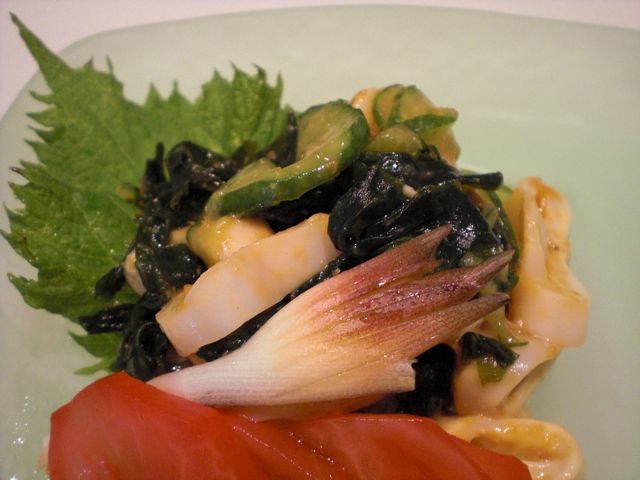
Grilled squid, wakame and myouga in vinegar miso sauce イカとワカメ, 茗荷の酢みそ和え


This is a made-from-leftover dish and very similar to  the dish I posted previously but since we harvested the very first myouga 茗荷, this is a preview of the myouga dishes to come. We grilled marinated squid (in lemon zest, olive oil, fresh thyme etc) few days ago but it was not a roaring success. I used this leftover squid, combined with a type of sea vegetable called "wakame" 若布, and cucumber to make this small starter dish. I added the star attraction--a garnish of myouga.

I thinly sliced cucumber (American mini cucumber) and salted the slices. I squeezed out the excess moisture and lightly dressed it with sushi vinegar. For "wakame", after re-hydration, I squeezed out the excess water and also lightly dressed it with sushi vinegar. Before dressing with  a "sumiso" sauce, I again squeezed out excess liquid from both the cucumber and wakame. I sliced the left over grilled squid into thin rings.

Karashi sumiso sauce: This is my regular sumiso sauce with miso (I used red miso this time without any particular reason), sugar and rice vinegar with Japanese hot mustard.

After dressing everything in the sumiso, I garnished with a perilla leaf, sliced Campari tomato, and fresh myouga (just a cameo appearance of myouga here). Because of the karashi sumiso, the squid tasted better and the myouga has such a unique taste it really added to the dish.

We are still waiting for the myouga to get a bit larger.

Saturday, July 10, 2010

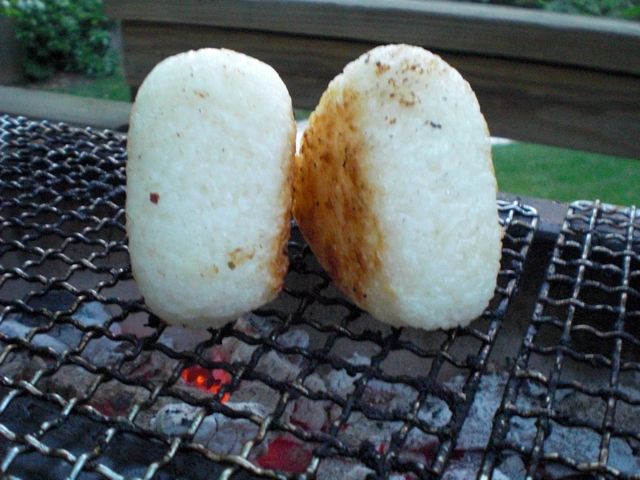
How to make a perfect grilled rice ball with crispy crust all around. 完璧な焼きおにぎりの作り方

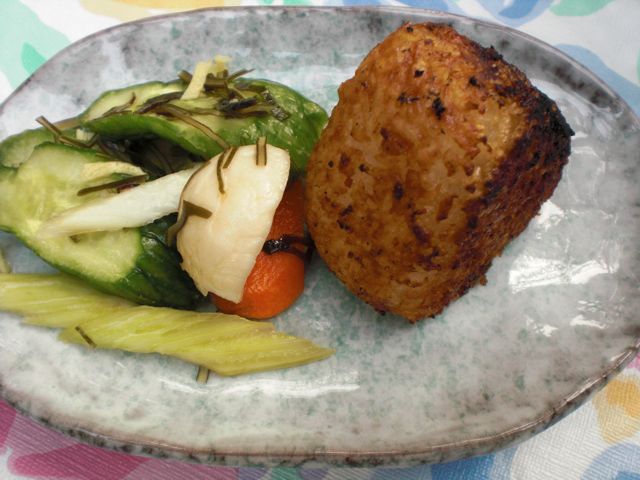
Grilled rice balls 焼きおにぎり are the most common "shime" 締め dish for us when we fire up the grill, either the Konro or Weber. My wife really likes the crispy brown crust and encourages me to maximize the crust around the entire rice ball. But it is difficult to get crispy crust on all sides since the rice ball usually does not stand on the side by itself. At my wife's suggestion, I made a rice ball that does, in fact, stand on its side. I did this by making triangular-shaped rice balls with wider and perfectly flat sides. I shape the rice ball by placing an amount of cooked rice in the middle of a piece of plastic wrap. I gather the ends of the wrap together and form a ball. Then I shape the ball into a triangle. Since the rice ball is wrapped in plastic, I flatten the sides and then test to see if the rice ball will remain standing on the counter top without any support. If it rolls over I flatten the sides and test again. I do this on all three sides). Here they are! Standing up on their sides very proudly without any support. We now have the perfect grilled rice ball, nicely crunchy and brown crust all around. Toward the end of the grilling, I brush all the surfaces with either yuzumiso 柚子味噌 or mirin-soy sauce mixture. This time, I used Yuzumiso. In most Izakayas, grilled rice balls are not grilled long or thoroughly enough and certainly do not have a crunchy crust on all sides. Hope other Izakayas will emulated this (not likely).

By the way, a small white half moon shaped item is a Japanese turnip (ko kabu こかぶ) which was grown by our friend. It turned out that this kabu is rather spicy (hot).

Thursday, July 8, 2010

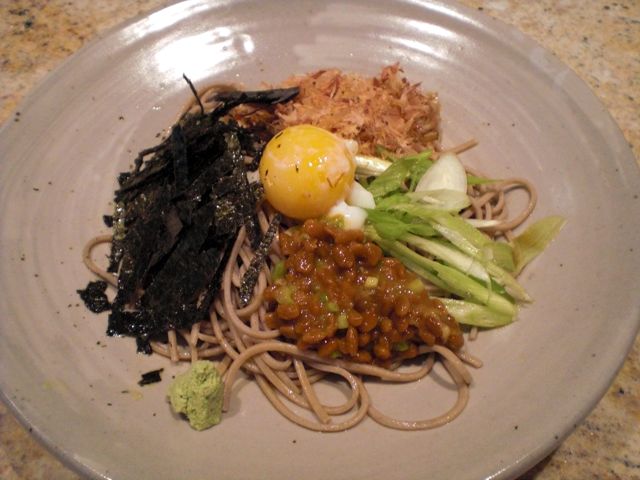
Natto soba 納豆蕎麦


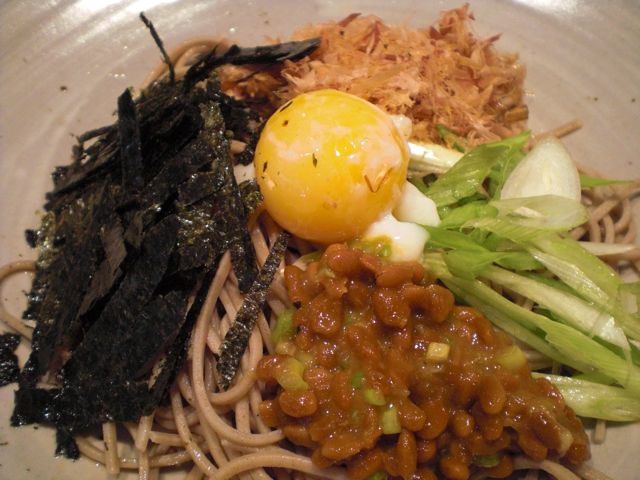
Several things came together to inspire me to make this dish. First the cover picture on the cookbook "Takashi's Noodles" triggered the memory of a similar dish I occasionally had for lunch at a Soba restaurant in downtown Sapporo. Second, it has been really hot and muggy here--the kind of weather that calls for cold soba.  In Japan, soba is a very popular lunch item and there are many restaurants specializing in soba and they do a brisk business during lunch. The combination of cold soba topped with natto 納豆 is rather classic and called "Natto soba" 納豆蕎麦 which was one of my favorites. I made this as a "shime" dish one night and found out my wife never had this before.

This is not a recipe per se since this is just a plate of soba and various garnishes which happened to include natto. A raw egg yolk usually accompanies this dish. Raw or undercooked eggs here in the U.S. are always iffy because of the potential for Salmonella contamination. We use "free-ranging" and "organic" brown eggs for dishes that are not fully cooked or have runny yolks. We do not know, however, if there is scientific or statistical evidence that these eggs are indeed safer than regular supermarket white eggs. (P.S. I found an article indicating that there is a lower risk of salmonella contamination in organic and free ranging eggs, although the risk is not zero. I also found that pasteurized shell eggs* are going to be available more widely in very near future.) We have been eating soft boiled eggs, poached eggs, and sunny side ups for many years and so far, (knock on wood) we have not experienced any ill effects. This time I used egg yolks from  "Onsen tamago" 温泉卵, which I made from the brown eggs.  This is a very peculiar Japanese way of cooking eggs, which, I am sure, I can describe in more details in a separate post.

I cooked dried soba noodle as per package instructions and washed them in cold running water and drained. I diluted a bottled noodle (concentrated) sauce in cold water to my liking. Natto was prepared my usual way. Other garnishes include thinly sliced (on bias) scallion , dried bonito flakes, thin strips of nori and an egg yolk from the onsen tamago. Just before eating, I poured on the dipping sauce. I took a dab of  wasabi and worked it in by mixing all the items well. This is a perfect dish for hot summer days. By the way, my wife, who is not a card-carrying member of the Natto fan club, liked this dish.


* P.S. 2: We found Davidson's Pasteurized shell eggs in our neighborhood market (one we have not been before). I will have a separate post for the pasteurized shell eggs in the near future.

Tuesday, July 6, 2010

Grilled Capelin 焼き ししゃも


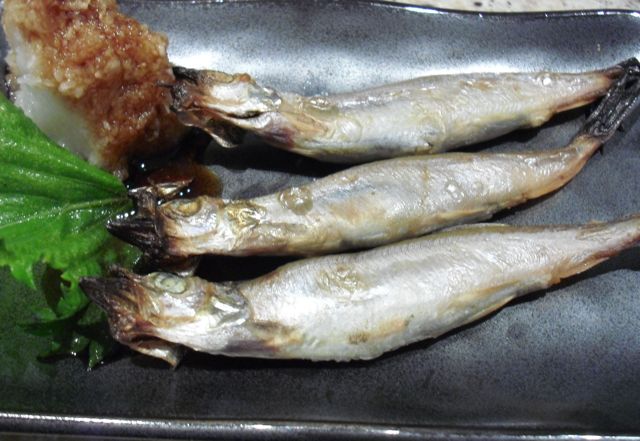
Shishamo ししゃも is a small salt sea fish endogenous to Hokkaido 北海道 and the name is derived from a native Ainu language meaning “willow leaf fish”. The name of this fish in Kanji 柳葉魚,  is a classic example of “ateji” 当て字 in which the meaning of the kanji letter is “willow 柳”+”leaf 葉”+ “fish 魚” but there is no way to pronounce this Kanji as “shishamo”. Although you can still get true shishamo in Hokkaido, unfortunately,  the vast majority of “shishamo” you buy and eat at an Izakaya nowadays is not true “shishamo” but its cousin “Karafuto Shishamo” or Capelin. (see P.S. below) That includes the one shown here which came from Canada. Although my memory of eating shishamo while bar-hopping in Susukino 薄野 is a bit foggy (whether because it was such a long time ago or because I was, in fact, bar-hopping), the shishamo tasted much better in Hokkaido. Whether it was “true” shishamo or “Karafuto shishamo” I was eating, like the rest of the memory, is somewhat unclear.

In any case, this fish is among the Izakaya favorites and the female with eggs or “Komochi Shishamo” 子持ちししゃも is much better to eat than the male fish without eggs. The  eggs of this fish “Capelin roe” are often seasoned and artificially colored (wasabi flavoured etc) and served as “Masago” or sometimes “Tobiko” at a sushibar. “Tobiko” should be  flying fish roe, so there are lots of substitutions and confusing naming when it comes to fish.

We get these fish frozen and I grilled them in a toaster oven unthawed and serve it with grated Daikon and soy sauce. This may not be the true “shishamo” but it goes well with a drink of sake.

P.S. Jon provided me with an eyewitness evidence that, indeed, some Izakayas serve true Hokkaido shishamo 北海道本ししゃも. I believe this is the menu from "Honoka". This is something I can look forward to next time we visit Japan. Thank you, Jon.