Wednesday, May 11, 2011

Baked spicy chicken wings 手羽のピリ辛焼き

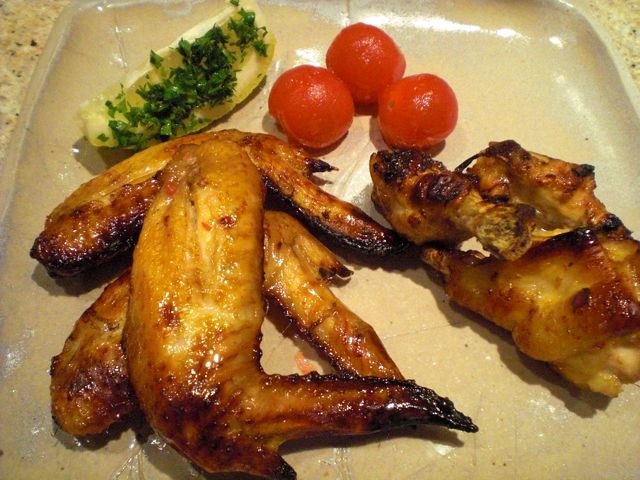
This is another variation on the theme of chicken wings. Chicken wings are popular drinking snack in the U.S. (Buffalo wings) as well as in Izakaya in Japan. They are cheap and perfect with any drink. This variation is based on the recipe from Otsumami Yokocho p58. As you can see here, I followed the Japanese way of not removing the wing tips, although there is not much to eat in the wing tips.

I had a package of chicken wings (6). I noticed, the package had a sticker on it stating that the chicken was purely vegetarian and no animal by-products were fed--does this piece of information make me feel better about eating them? We - well, most of us - are omnivores but we like vegetarian chickens). I separated the drummetts and made a slit in the wings between two bones (ulna and radius to be precise). 

I then marinated the drummetts and wings in a Ziploc bag with sake (2 tbs), mirin (2 tbs), soy sauce (4 tbs), Chinese chili paste (1/2 tsp, use more for spicier wings, hot bean sauce 豆瓣酱 or chili garlic sauce 蒜蓉辣椒醬, I used the latter), garlic (one fat clove grated) and ginger (1/2 tsp grated) for 20-30 minutes.

I baked them in a hot oven (450F, convection on the top rack) for 10 minutes and turned them over and baked another 10 minutes until the skin became crispy and the edges browned.

I served this with a wedge of lemon (I had extra chopped parsley. I garnished the one side of the lemon wedge with this.), drunken cherry tomatoes. This is a very nice drinking snack similar to Buffalo wings with an Asian twist. It could have been a bit spicier even for us. Next time, I will increase the amount of hot chili paste.

Monday, May 9, 2011

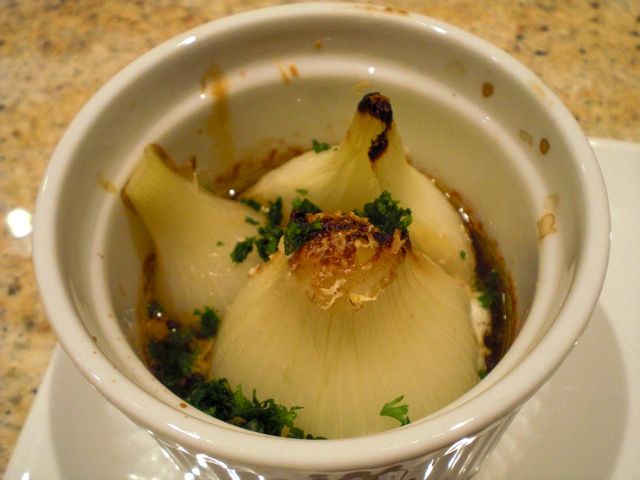
Simmered and baked Vidalia spring onion 春物バイデリアオニオンのスープ煮

Vidalia onion is named after a place in Georgia called Vidalia. These onions are known for their mild flavor (for onions) and sweetness. It appears that there is a strict definition of what constitutes a vidalia onion based on the growing region and varietal used--if not from the specific counties in Georgia specified by law, it may be a sweet onion but it is not a Vidalia. In addition the vidalia onion is the state vegetable in Georgia (I didn't know states had official state veggies). It seems that  Vidalia onion is sweet because of the soil which is said to be low in sulfur and the characteristic of the particular onion varietal. Further digression: One of the our favorite restaurants in DC is called "Vidalia". The restaurant is known for new Southern cuisine which includes baked Vidalia onion.  In any case, I got spring Vidalia onion* and made this simple dish to enjoy its wonderful sweetness.

(* Spring onions are, as I understand it, young onion in spring; the bulb is still small and the flavor is mild and sweet. As seen the image on the left. This image was borrowed from this website.

I bought 4 onions. I just cut the root end and green parts and removed some of the blemished outer skins. I cooked this in chicken broth with bay leaves (3) and black pepper corns (5-6) for 20 minutes or so. I then put the cooked onion in a small ramekin in which the oinons fit snugly. I cut one in half to make them fit snugly). I added a small amount of the cooking broth on the bottom (2 tbs). I added soy sauce (1 tsp or salt), pats of butter (1 tsp), grated parmesan cheese and baked it in a 400F toaster oven for 10-15 minutes. I garnished with chopped parsley.

This is very simple preparation but brought out the sweetness of the spring Vidalia onion.

Saturday, May 7, 2011

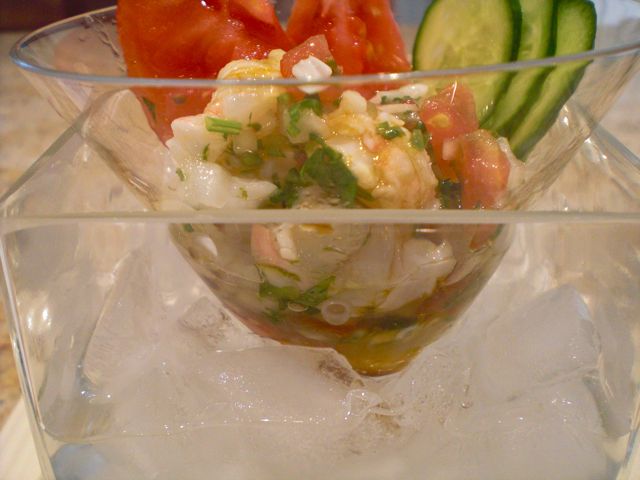
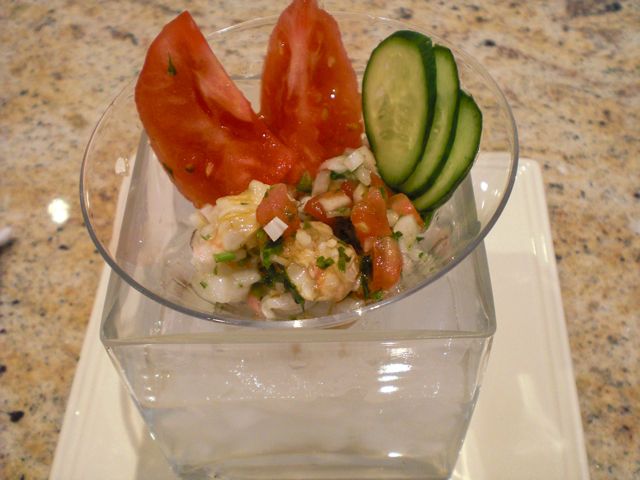
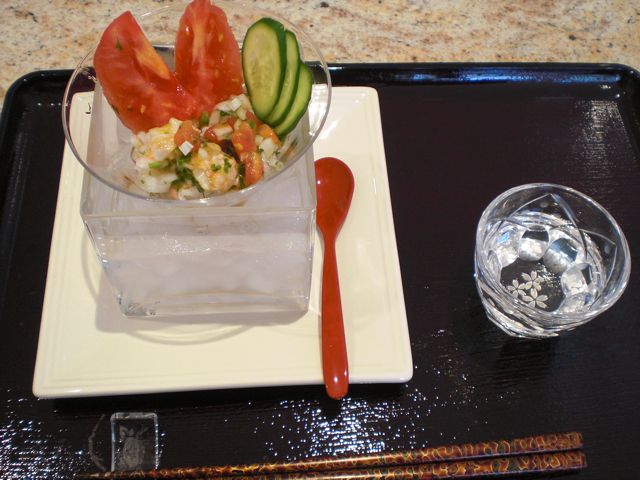
Amaebi Ceviche 甘エビのサビーチェ

This is what I made from the two largest amaebi shrimp we received from the latest shipment of goodies from Catalina Offshore products. This is more like a classic ceviche than the one in the previous post. In addition, I remembered that we had an interesting Martini glass and used it to serve the amaebi ceviche. I am going to present a tight shot, followed by a long shot, and a longest shot this time.

After I removed the head and roe (both shrimp had a large amount of roe) which was used in miso soup, I removed the shell and tail. I deveined and then cut it into small rounds. The marinade is mixture of freshly squeezed lime juice (4-5 tbs from 2 limes) and yuzu juice (1/2 tsp from the bottle). I added the zest of the lime (1/2 tsp, grated by a micro-grater), Vidalia spring onion (half, finely chopped), tomatoes (half, deseeded, skinned, and diced), Jalapeno pepper (1/2, seed and veins removed and finely chopped), parsley (1/2 tsp, finely chopped), salt and pepper. I mixed this into the marinade and added the shrimp. I let it steep (chemically cook) for few hours in the refrigerator.

To serve, I drained the excess marinade, added a splash of good olive oil, sake, Tabasco (after tasting, I thought, it needed a bit more heat), and soy sauce. I placed it in the Martini glass on ice and garnished it with wedge of tomato and cucumber slices.

Cold sake appears to be appropriate for this dish. Compared to the previously posted amaebi ceviche which is not really (chemically) cooked, this is more like a traditional ceviche, and it tasted good. I did this because, although the shrimp was packed with ice in the meat conpartment of the refregirator, it had been 2 days since we received the live amaebi.

Thursday, May 5, 2011

Deep fried shrimp heads and Royal trumpet mushroom tempura 海老の頭の唐揚げとエリンギの天ぷら

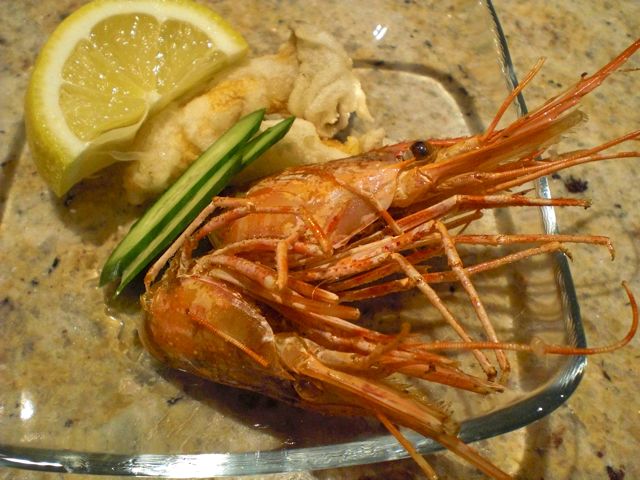
I have posted deep fried shrimp heads before but it is, again spring season for amaebi or spot prawns. As usual, this came from Catalina offshore products and the shrimp was wild caught in water off San Diego. When they arrived, all of them were still arrive (albeit just barely), which was a very good sign.

One of the problems with spring amaebi (spot prawns) is their size. Although this was supposed to be 12 count per pound, We had only 6 in the pound; 4 were about 10C in size but two were gigantic. For sashimi, we prefer the small size. For smaller amamebi, the heads can be easily deep fried but when shrimp are too big, it is not feasible to do this.

In any case, we first had the four smaller ones as sashimi and also made deep fried shrimp heads. I trimmed the antennae and blotted the excess moisture (using paper towels) and fried in 350-370F peanuts oil for 6-7 minutes. After draining the oil, while they were still hot, I salted them. Since I had hot oil, I also cooked some royal trumpet mushrooms (very similar to eryngii which are popular in Japan) tempura. I tore one mushroom into 4 pieces from the bottom of the stem.  Tempura batter was made of cake flour with the addition of potato starch and cold water (4:1 ratio of the flour and potato starch. I added cold water until the desired loose "batter" consistency was reached).

The shrimp heads had a very nice crunchy shell and lots of sweet meat that almost tasted like small lobster. A word of caution;  bite down  the shell  perpendicular to your teeth lest you incur injury from the sharp shell or leg impailing your pallet or gums. For sashimi, beside sweet shrimp, we had maguro (ko-toro 小トロ bordering on chu-toro 中トロ) and uni 雲丹 sea urchin. Nothing but sake works for us for this type of food.

Tuesday, May 3, 2011

Ratatouille with a poached egg ラタトゥユのポーチドエッグのせ

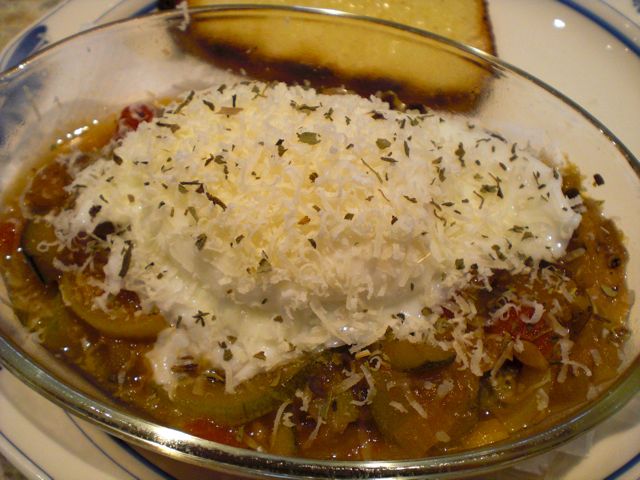
We got the idea for this dish from Eric Ripert's TV show. Since we had leftover ratatouille, it is very easy to make. From our experience of trying a few baked egg dishes such as  Oeuf cocotte, we learned that baking eggs and having them come out just right instead of raw or like rubber, is very difficult. When the yolks are just done perfectly, the whites are not done or the whites are done but the yolks are overcooked. So whenever we see "baked" eggs recipes, we use "poached" eggs instead. This way we have a much better control over the doneness of the eggs.
I put leftover ratatouille in a small ramekin and warmed it in a 375F toaster oven for 20 minutes (or microwave). I then placed a poached egg on top of the ratatouille and topped with grated Parmigiano-Reggiano. Since I did not have any fresh herbs, I sprinkled dried thyme (fresh basil or thyme would be nice).

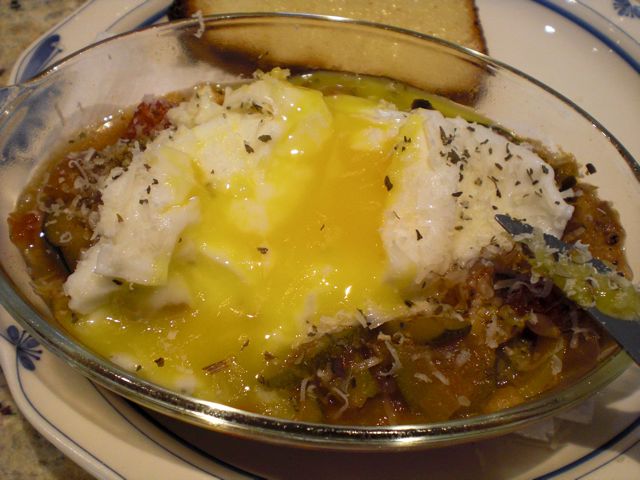
Here is the dish after the yolk was broken*. I think this is a combination which can not go wrong. This could be a breakfast or late night drinking snack.

*Please note that we use pasteurized shell eggs . Use pasteurized eggs or safe eggs from an alternative source for any dishes for which you undercook or not cook eggs.