Thursday, September 12, 2019

Sashimi salmon four ways 刺身用のサーモン

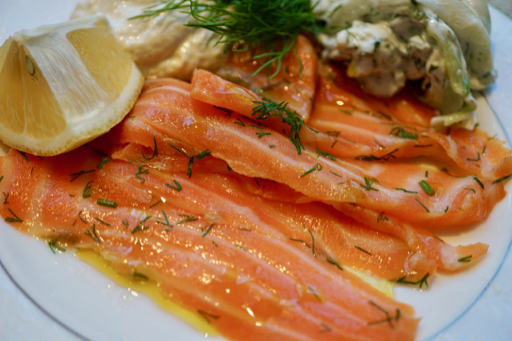
We found frozen salmon for sashimi and boiled octopus legs in our freezer. I bought these items from Catalina offshore products last December for the 2019 New Year's celebration. At that time we also got frozen tuna sashimi which we ate soon after it was purchased for New Year. The piece of salmon was quite large and we had enough other food for the New Year. It ended up uneaten and stored in the freezer. In addition, I had purchased the frozen octopus legs as a kind of "insurance policy" in case, as has happened some years, we could not get the octopus legs for New Year from our Japanese grocery store. This year we were able to get it, however. So, the extra octopus joined the huge piece of salmon in the freezer. As my wife so aptly pointed out 'frozen fish, unlike wine does not improve with age', we decided to enjoy the salmon and octopus while we could. Since the salmon sashimi was 1 lb (which is a lot of sashimi salmon for the two of us), I  had to come up with a plan on how to use it up. These are the several dishes I came up with. The first dish was a no brainer; sashimi. I added some Japanese dashimaki omelet だし巻き卵, which I had made earlier, and green beans with sesame dressing.


This salmon was not fatty but was quite good. I arranged it into the shape of a rose.


The boiled octopus was sliced thinly in a wavy cut as usual. I made sumiso sauce to my wife's specification (not too vinegary). I thought it was a bit more chewy than the octopus we usually get from the Japanese grocery store but it tasted very fresh (not fishy at all).


The second salmon sashimi dish was very similar to what I posted before. Just in case we needed some spiciness, I served it with Japanese red pepper paste (from a tube).


The dressing was a mixture of lemon juice, sesame oil, soy sauce and garlic. I mixed in finely chopped chives as well.


The third dish was instant Gravlax. Instead of vodka I used gin this time. It added, of course, a gin-flavor. I thought this might be too strong but my wife liked it. Since we ate it all before I remembered to take a picture I am using "stock footage" by posting a previously posted old picture.


The fourth dish was Russian  marinated salmon. Since I was using sashimi-grade salmon, I served it partially cooked, after only one day in the refrigerator. (I usually leave it three days in the marinade to make sure the salmon is fully ”chemically” cooked). The center of this salmon was still raw which added a more delicate fresh flavor. (Again I did not take pictures and I'm posting an old one here).


Since the gravlax and Russian marinated salmon stayed eatable longer than sashimi, we enjoyed these two items for a few days and finally  finished the salmon sashimi block. This was a tough job but somebody had to do it.

Monday, September 9, 2019

Matsutake feast 2019 松茸尽くし 2019

Oregon mushrooms just started shipping North American fresh matsutake. Although North American matsutake is no comparison to the Japanese or even Mexican variety, we usually get them just to commemorate the season. As I posted before, this matsutake requires more aggressive cleaning since the dirt is embedded into the skin of the mushroom and just rubbing with a moist towel does not do the job. I have posted everything posted here and some more.  But this is a once a year matsutake feast.

Since I do not have an appropriate set of "dobin-mushi" 土瓶蒸し vessels,  I used mini-donabes to serve Matsutake soup 松茸のお吸い物.


For color, I added blanched broccolini, thinly shaved carrot and chives. I also added cubes of cod and shrimp.


The soup base is bonito-kelp broth (using a dashi pack) and seasoned with mirin and light colored "usukuchi" soy sauce 薄口醤油. The cod and shrimp (Venezuelan red shrimp), both were previously frozen, stored in our freezer and thawed the morning I made the dish. I salted and marinated them in sake before adding to the soup. Upon opening the lids of the soup containers, the lovely matsutake aroma wafted up. (This initial whiff of  matsutake fragrance is one of the traditional "enjoyments" of this dish.)  This is the first time I used cod for this type of soup (any gentle tasting white meat fish will do). The cod was thick fleshed and tender and really good. The shrimp was sweet and excellent as well.


I was planning to have a chawanmushi 松茸の茶碗蒸し next but it took longer than I planned for it to finish cooking so I served matustake touban yaki 松茸の陶板焼き next. We enjoyed it simply with salt and lemon.


Finally, the chawanmush was done. For this batch, I added the cod, shrimp, kyo-bu 京麩 (dried gluten cake, rehydrated),  a cube of dashimaki だし巻き Japanese omelet (egg-in-egg idea). As usual, I made six so that we could enjoy the "leftovers" later.


I garnished it with finely chopped fresh chives. The soft egg custard was infused with matsutake aroma/flavor.


#1. This is the amount of matsutake I used for 6 small chawanmushi (about three matsutake).
#2. The first layer of the chawanmush is, of course, the matsutake.
#3. Kyo-bu is a small decorative gluten cake from Kyoto. It does not have any taste by itself. Just texture and whatever it  absorbed.
#4. Shrimp.
#5. Cod.
#6. Cube of dashimaki.


This was a sort-of treasure hunt. We love chawanmushi of any kind but this was a bit special. I used to add ginko nuts which, in the past, were readily available in a can (boiled) but not anymore for some reason. They just disappeared and we have not seen them anywhere. Finally we finished our feast with matsutake-gohan 松茸ご飯. This time I think I made it perfectly. The rice was slightly firm but well cooked.


For this occasion, I wheeled out my special "Kamado-san" earthenware rice cooking pot (#1).  As per the instructions, I  set the inner lid with its steam holes arranged perpendicular to the outer lid steam hole; necessary for the rice to cook properly(#2). As usual, I used bonito-kelp broth seasoned with mirin and light colored soy sauce which I enhanced by adding rehydrated strips of kelp and soaking liquid. When the lid was lifted, the smell the matsutake and freshly cooked rice (good combination) wafted up (#3). I mixed the rice and the matsutake before serving (#4).


Besides, the matsutake dishes, we had a few more of our  usual appetizers and cold sake. Once a year, this is worth doing.

Friday, September 6, 2019

Pecan dates muffin ピーカン、デイツ マフィン

This is another one of the muffins my wife made using a recipe from the "La Brea Pastry" cookbook. As usual she made some alterations such as reducing the amount of sugar and increasing the amount of dates.


As my wife was half way through putting together the ingredients for the muffins she discovered that the box of dates we had in the pantry was marked 2011 (somewhat past its due date). Initially she was at a loss of what to do. We are often not averse to using products somewhat past their "use by" date but 8 years seemed a bit excessive. But how can you make date muffins without any dates? Then she remembered we happened to have assorted fruits from Harry and David which included a type of dates called "Medjool dates" which was in the original recipe. I am sure this works with other kind of dates. In any case, this was good and unique muffin and thanks to my wife's reducing the sugar, it is perfect for breakfast for us.


Ingredients:
1 cup pecans toasted
2 sticks of butter (Original recipe switches from sticks to cups. It calls for 3/4 cup butter used for batter and 1/4 cup painted on top after muffins are cooked. But 2 sticks in batter even if don’t paint the top might also work because when you brown the butter the water evaporates and you actually end up with 3/4 cup.)
1 tsp vanilla
20 soft Medjool dates, pitted and cut into dices (or any dates that are available) (We also used a full 10oz container of dates. They were not soft so we cooked them gently in water until they were soft. Then removed the skins)
3/4 cup brown sugar
2 1/2 cup flour
1 Tbs. baking powder
1/2 tsp salt
1 1/2 tsp ground cinnamon
1 cup buttermilk
2 large eggs

Directions:
Brown the butter in a sauce pan until dark brown with a nutty aroma. After it has cooled add the vanilla. In a food processor combine the nuts and the brown sugar and process until it is the consistency of fine meal. In a separate bowl combine the flour, baking powder, salt and cinnamon. In another bowel combine the buttermilk, eggs and browned butter. Add the nut mixture to the flour mixture. Stir until combined. Add the buttermilk mixture and stir until incorporated. fold in the dates Scoop batter into greased muffin tins and cook at 400 degrees for 18 to 20 minutes.


These muffin are wonderful. They have a lovely texture and rich nutty taste and a sweetness and flavor that somehow is reminiscent of maple syrup. They were not too sweet either.

Tuesday, September 3, 2019

Gazpacho with pumpernickel bread ガスパチョ

One hot day my wife decided she wanted a cold soup such as gazpacho but she wasn't in the mood for the acidity of tomatoes. Then she remember that there was a white gazpacho made with nuts. So she looked at several recipes on the internet and put together this one by combining the ingredients from the ones she reviewed. Most of the recipes called for stale white bread (french bread) but she didn't have any french bread so she decided to use what she had which was sliced pumpernickel. The bottom line is that apparently any type of bread will work just fine.


As a result of using pumpernickel the soup is coffee brown in color. If she had used white bread, it would have been white. Toasted pumpernickel bread added toasted and additional flavors besides the color.


Ingredients:
1 cup toasted almonds
1/2 tsp. garlic powder (or roasted garlic cloves to taste)
1/2 tsp. salt
2 to 3 cucumbers peeled and chopped
1 1/2 chicken broth (or vegetable broth)
1/3 cup olive oil
2 Tbs. sushi vinegar
4 slices of pumpernickel bread toasted, crusts removed and torn into pieces (about 2 1/2 cups of pieces)

Directions:
Put some of the cucumbers, nuts and bread into a food processor and puree. Add some of the liquid as needed to get the puree going. Once it is a smooth thick consistency add the garlic, salt, vinegar, the rest of the cucumbers and the rest of the chicken broth. Puree until creamy and smooth. Then with the machine on puree, gradually add the olive oil in a steady stream to make a smooth almost mayonnaise like emulsion.

Serve garnished with sliced cucumber and remaining roasted almonds. If it is too thick dilute with milk, cream, buttermilk or chicken broth. (We found that we like the chicken broth best because it lets the combined flavors shine through. )

This soup is great for a hot summer day. It is rich and creamy. It has a pleasant nuttiness from the almonds and pumpernickel but the cucumbers give is a light freshness. The flavors get better over time. Next time we may try making this kind of soup using other nuts such as walnuts or pecans.

Saturday, August 31, 2019

First myoga harvest in 3 years 三年ぶりの茗荷の収穫

We could not harvest our myoga (myouga) 茗荷 for the past three years due to various obstacles . More recently, most of our myoga plants disappeared for some reason. Possibly the rabbits ate them. (They did have signs of being tasted by some critter before they disappeared).  Or more likely,  they were removed by mistake by our gardener's nephew who was helping out with the fall clean-up. (I suppose they looked "weedy"; not like something we should have in the garden and they were taking over, which was OK with us).  We tried to purchase some myoga though the internet without success. So when our landscaper came to do some work in our yard this year we asked if he could get us some replacement myoga. He kindly gave us 4 myoga plant/rhizomes from his father's myoga patch (his father is a retired master Japanese garden landscaper).  We thankfully planted them this spring. Just to give a clear message to all involved (rabbits and especially gardener's nephews) we surrounded the plants with stakes and a plastic mesh fence to make it clear that these were not plants to be messed with.  In any case, later in the spring we discovered a few straggler myoga from the previous batch which we think survived because they were "hiding" behind and amongst other plants.

We have posted many uses of myoga including picked myoga. We still have some pickles left from 3 years ago in our refrigerator.  We are still enjoying them despite the fact they are "refrigerator pickles". They are still quite good and show no sign of going bad. But it is time to look for the new harvest. One weekend, my wife donned her  mosquito suit. On hands and knees with head buried in the plants, scrabbled into the dirt with her hands to uncover the buried flower buds of the myoga which is the part that is eaten. (They have to be harvested before they emerge from the ground. Once they bloom they become soft and mushy and aren't good.) It is not a pleasant task...but, hey, we really like myoga!  She found three developing buds (see below) from the old surviving myoga plants but none from newly planted myoga. (We'll probably have to wait until next year for them to be established enough to produce buds.)


My wife also said she uncovered a few very premature buds and covered them up again so they could grow bigger. We should wait for few more weeks to hopefully get a better harvest. In any case, we have not had fresh myoga for some time.  So, I served this as a garnish for cold "hiya-yakko" tofu 冷や奴.


The tofu is, as usual, one of the "Otokomae" 男前 tofu. I also garnished with chiffonade of perilla. For sauce, I used the usual, concentrated noodle sauce from the bottle.


Myogo may be acquired taste but we really love it especially fresh and it was wonderful to have their taste again. It has a very unique flavor that is hard to describe and there is no equivalent to which to compare it. Hope we will have more myoga harvest this year.