Monday, January 30, 2012

Marinaded Hamachi Sashimi ハマチの漬け

Since we had a block of frozen hamachi (1.6 lb), I had to come up with some other ways (besides straight forward sashimi) of enjoying it. Marinated tuna sashimi or "zuke" 漬け is much more common than marinated hamachi but "hamachi no zuke" ハマチの漬け is a very interesting dish and the effect of marination is quite different from tuna.

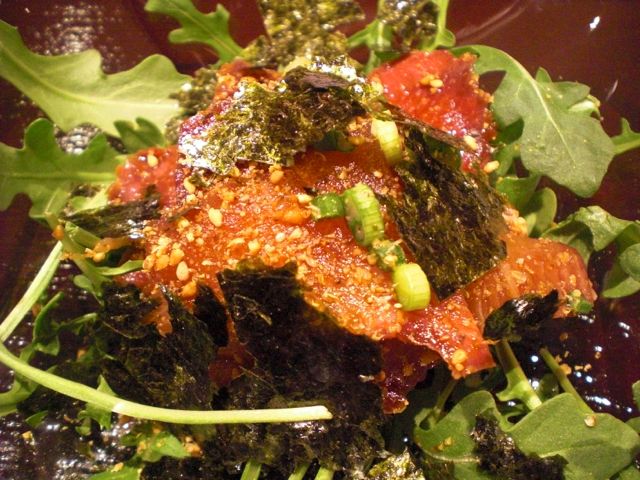
Here I served hamachi zuke in a bed of baby arugula.
Marinade: This is very similar to one I use for tuna sashimi. I have made several variations of the marinade for tuna. This time, I made it a bit differently. I first put an equal amount of sake and mirin in a small sauce pan (about 3 tbs each) and let it boil so that the alcohol dissipated (no lid) and the mixture reduced to nearly half. I then added, a 1 inch square of kelp and soy sauce (2 tbs). When the mixture returned to a boil, I shut off the flame and let it cool down. Meanwhile, I dry roasted white sesame (2 tbs) in a dry frying pan until fragrant. I tipped it off into a Japanese mortar or suribachi すり鉢 and coarsely ground the sesame which I added to the marinade (leaving 1-2 tbs aside for garnish). I placed the marinade in the refrigerator to completely cool. 

I sliced the hamachi sashimi rather thinly (3-5 mm) and placed the pieces in the cold marinade for 1 hour in the refrigerator. The length of marination is up to you but I marinated the pieces for  beween 15 minutes to one hour. 

I removed the hamachi pieces and put them in a separate bowl preserving the marinade. I mixed in chopped scallion. I placed the marinated hamachi on the greens, garnished with crumbled seasoned nori ("ajitsuke nori" 味付け海苔 from a package), the roasted white sesame seeds which were previously set aside, and a dab of wasabi. I also served the marinade on the side side just in case.
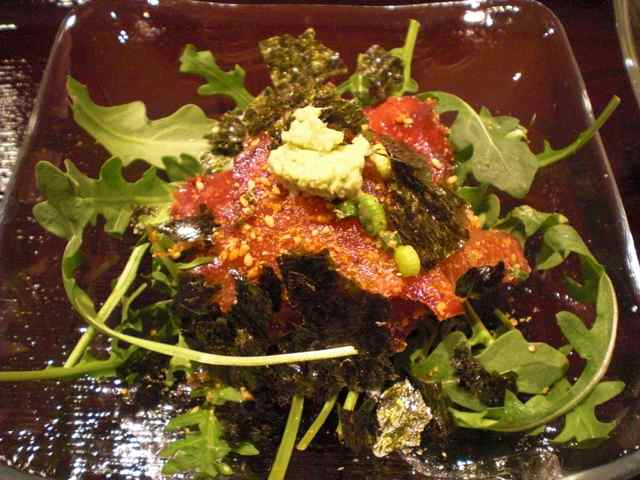
Although I made the marinade a bit on the sweet side for my taste (probably too much reduction of the sake and mirin), it is mellow and nice. The texture of the hamachi became firmer and really looked like a piece of beef. The taste and texture are very nice but the effects of marination are different from those of tuna. We like this very much.

Saturday, January 28, 2012

Hamachi Yellow tail and avocado sashimi ハマチとアボカドの刺身

Hamachi ハマチ or yellow tail amberjack is young buri ブリ. This is one of the fish which get promoted or "shusse-uo" 出世魚 as it grows up. There are somewhat different definitions and names according to the regions (Kantou 関東 such as in Tokyo vs. Kansai 関西 such as in Osaka) but a fully grown specimen is called "buri" 鰤 ぶり in either region. It is always difficult to find the exact English counter part to Japanese fish names. "Kampachi" カンパチ is another one belonging to the amberjack family and is a very popular sashimi item (most available here is farm raised in Hawaii. Actually, wild caught Kampachi is reportedly not suited to eat as sashimi because it is often infested with parasites). This fish may be different from Hamachi but I am not sure how similar or different taxonomically. (If this sounds confusing because it is.)  Kampachi appears to be less fatty but has a more delicate flavor. The majority of hamachi you see at sushi bars are also aqua cultured. In general, we are usually more interested in tuna and uni but this time, I got frozen sashimi block of hamachi from Catalina Offshore products.

Here is the hamachi sashimi I served with a "sashimi" avocado, Campari tomato with moromi miso もろみみそ and quickly made daikon namasu 大根なます(daikon in sweet vinegar). Wasabi is, as usual, real wasabi from the tube but this time, I had to perform a surgery (C-section) and take out the wasabi from the tube and mix the liquid and solid together to reconstitute (This is one of the problems of real wasabi in a tube--the water gets squeezed out but not the solids). It does have a nice smell and flavor very close to real grated wasabi rhizome, though.
 
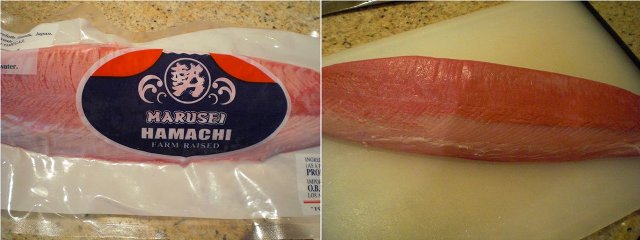
Some times, Catalina does carry fresh hamachi but we have not tried it yet. This one was from Kyushu 九州, farm raised and flash frozen in minus 50C judging from what the package stated. It was treated with carbon monoxide (like a frozen tuna sashimi block) for retention of the color (it does not change the taste, is not preservative and is not harmful to your health). This package was rather large (long) and I had to soak it for several hours in the kitchen sink filled with cold water reinforced with ice cubes to thaw it. (They recommend using ice water rather than running water because, I suppose, the running water thaws the fish too quickly and unevenly). After it is thawed and out of the package the sashimi block looks like seen on the right below.
We really enjoyed this hamachi sashimi. It is as good or even a bit better than what we get in regular sushi bars (Many sushi bars also serve previously frozen hamachi). Since I did not have any other sashimi items, I also served sliced ripe avocado as a sashimi. You would be surprised at how well avocado slices go with wasabi and soy sauce. According to my wife, avocado served this way should be classified as fish.

Thursday, January 26, 2012

Yuzu-koshou mayonnaise 柚子胡椒マヨネーズ

Yuzu-koshou 柚子胡椒 is one of the most useful and versatile Japanese condiment/seasonings. It is a mixture of salt, chopped  peel of a Japanese citrus called "yuzu" 柚子 and chili pepper (usually green chili pepper but it could also be red chili pepper). Chili peppers are called "koshou" in Kyushu Island 九州. In the rest of Japan, "koshou" usually means either ground black or white peppercorns and chili peppers are called "Tougarashi" 唐辛子. One could make this from scratch if yuzu is available but, yuzu, even if available, in the U.S. is too expensive to attempt this.

The next best thing is to buy ready-made yuzu-koshou in a tube as seen in the left. This will keep at least a few weeks or more in the refrigerator after opening. Yuzu-koshou is usually used as a seasoning or condiment for Nabe dishes, noodles in broth, and cold cubes of tofu but it could be used in any dish. I use it to season meat mixtures for hamburgers or Japanese "Tsukune" dishes.

Another way to use yuzu-koshou is as a dressing. The easiest combination is to mixed it with mayonnaise. Like wasabi-mayonnaise, you could add quite a bit of yuzu-koshou, since the mayonnaise dampens the heat. I usually make it with a ratio of almost 1:1 of mayo and yuzu-kosho but this is totally up to your taste. You could also add soy sauce in addition.

Here are two examples of how I used yuzu-koshou-mayonnaise.

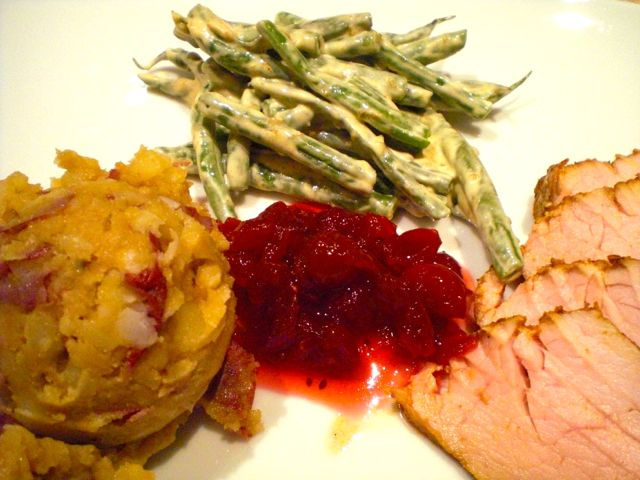
The first one below is steamed haricot verts dressed in mayo-yuzu-koshou. This was served as a side for Paprika-cumin rubbed low-temperature (350F) baked pork tenderloin slices, homemade cranberry sauce, my wife's mushed potato seasoned with soy sauce and butter.
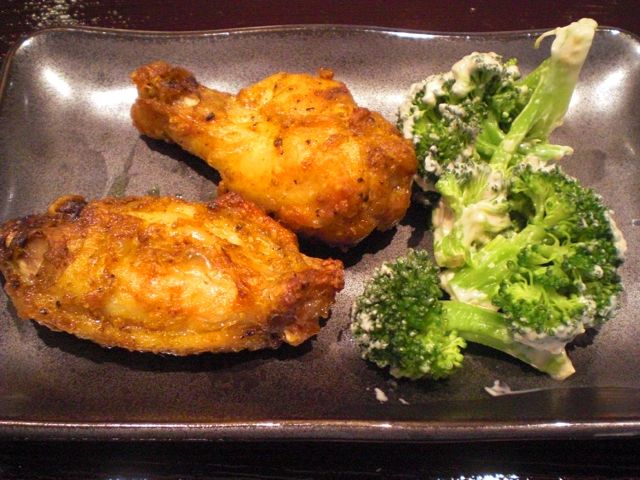
On another occasion, I served curry flavored chicken wing and drumet with steamed broccoli dressed in yuzu-koshou-mayo.
The mixture of yuzu flavor and spiciness really adds even to store-bought mayonnaise.

Tuesday, January 24, 2012

Hanpen fish cake dressed in wasabi sake lee ハンペンの山葵漬け和え

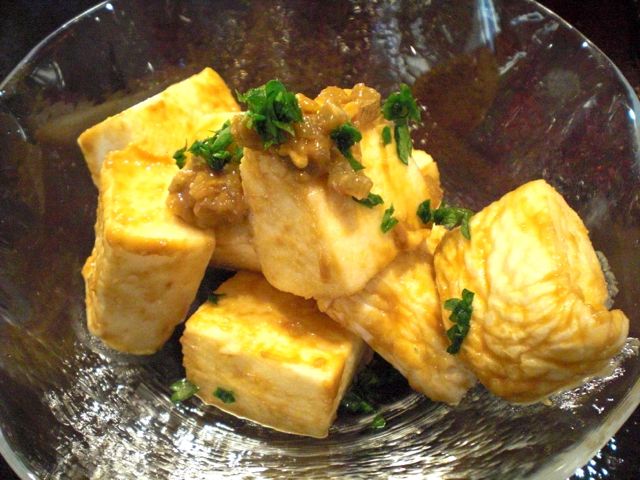
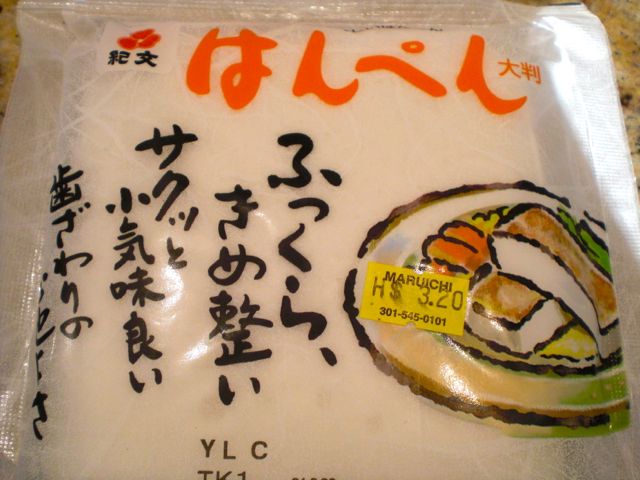
This may look like cubes of tofu but this is a type of fish cake called "hanpen" ハンペン. I posted a few items using this. This fish cake is made of white fish meat and egg white and looks snow white. In shizuoka 静岡, "kuro hanpen" or black hanpen is famous in which sardine meat is used and dark colored.  Instead of being deep fried, hanpen is usually steamed. As a result, it is soft and very mild in taste.
In the U.S., the best hanpen available is the "Kibun" 紀文 brand which comes frozen (see below).
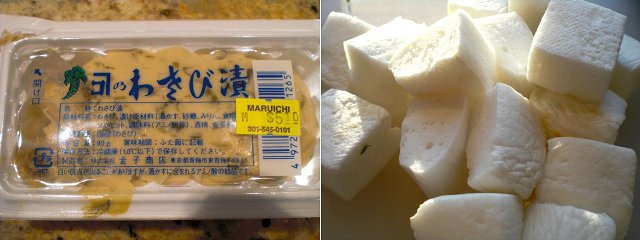
I happened to have "Wasabi zuke" 山葵漬け which came in a plastic tab frozen (image below left). I am sure it is not as good as the ones available in Japan especially in Shizuoka 静岡 but this has to do in the U.S.. You could just add soy sauce and nibble it as you sip sake or use it as a condiments for cold tofu, "Chikuwa" 竹輪 fish cake or anything else. Since I found hanpen in our freezer (from the New Year's purchase I am sure), I decided to have this as a drinking snack. I first defrosted it in a microwave oven and then grilled it in a toaster oven to make it plump up and very slightly brown the surface. I cut the hanpen into small cubes (image below right). I then made a mixture of wasabi zuke and soy sauce and dressed the hanpen cubes.
My wife was surprise by the texture since she thought this was tofu. It is a bit spongy in texture but it has a nice gentle taste. The taste was enhanced by the wasabi zuke which has a slight sweetness from the sake lee with a tang from the wasabi plants (stalks and leaves). A simple and good starter dish in a home Izakaya.

Sunday, January 22, 2012

Herring roe and cream cheese with wasabi 数の子クリームチーズ和え

Whenever we get herring roe or Kazunoko 数の子 for New Year, we have to finish it by the end of the first week of the year before it gets spoiled. Eating it just "as is" sometimes gets old so I tried to come up with different ways to serve kazunoko. Apparently other people think along similar lines as evidenced by this recipe.
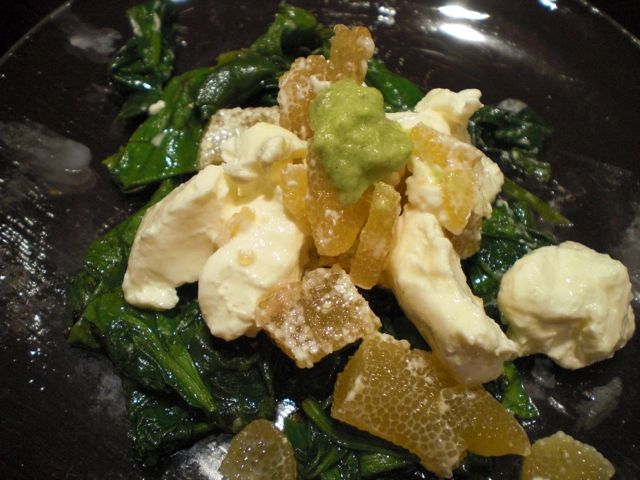
The recipe calls for small cubes of kazunoko and cream cheese served on the bed of greens. For greens, I used baby spinach slightly sautéed (wilted) in butter and seasoned with salt and black pepper. I am not sure if the cream cheese (American invention) in Japan is different from the U.S. version--Philadelphia cream cheese, but my version was soft even straight from the cold refrigerator. As a result, I could not make neat cubes from it. I added a dab of real wasabi but did not add any soy sauce since the kazunoko had enough saltiness.

This is a nice small dish which goes well with sake. The combination of crunchy kazunoko and soft cream cheese gives a nice contras