Sunday, April 5, 2026
Hanami 2026 #2 and #3 花見2026、二回目、三回目
The picture below shows the various dishes we served in the jubako. In picture #1, the dish in the upper left is a small “chirashi-sushi* ちらし寿司” scattered sushi with “ikura いくら” salmon roe, “uni ウニ” (not fresh uni but “Uni shuto うにの酒盗 from Maruhide 丸秀 which is the next best thing to fresh uni), and slices of avocado and cucumber.
*Since I had hydrated dried shiitake mushrooms left over from making vegetarian broth and “Kanpyo 干瓢” gourd peel from making salmon kelp rolls, I cooked and seasoned them with sugar and soy sauce (sweet and salty “ama-kara 甘辛” ). I chopped them up and mixed it into the sushi rice (this is the classic way of preparing rice for “chirashi-zushi ちらし寿司” scattered sushi).
The upper right is simmered mackerel in miso sauce 鯖の味噌煮 with small pieces of two kinds of dashi-maki omelettes だし巻き卵, left-over from the first hanami. The left lower is Russian marinated salmon サーモンのロシア漬け topped with ikura. Finally the lower right is an assortment of what I made mostly for the first hanami, all vegetalian including mock tofu 擬制豆腐, persimmon in tofu dressing 柿のしら和え, braised burdock 金平牛蒡, nappa and cucumber asa-zuke 白菜とキュウリの浅漬け,
and marinated qual eggs うずらの味玉.
The next day, I served similar items including scattered sushi. A notable addition were the fire-fly squid ホタルイカ we got from Regalis foods. We ate half of the quantity of squid soon after we received them. For the other half, I re-boiled, then removed the tough rock-like eyes and beaks and froze them. I thought they would be a perfect addition to the hanami feast. After thawing them, I briefly sautéed them in butter and seasoned them with a small amount of soy sauce. I also added karashi-sumiso 辛子酢味噌 miso and vinegar dressing with Japanese hot mustard (picture #2).
This has been our cherished once-a-year event. The only problem is that when the blooms are over, we have to wait a whole year before we can enjoy them again. As an aside, the Easter (and late blooming Christmas) amaryllis are also adding to the show.
Thursday, September 4, 2025
Izakaya in Sapporo Part5 札幌の居酒屋パート5
北海道札幌市中央区南7条西3丁目
セブンビル1F
Seven Bldg 1F
Minami 7 Nishi 3, Chuo-ku
Sapporo
For reservation 011-551-7733, Credit card accepted, Smoking allowed
One reason we went this place is that it was located in the “Seven building セブンビル”. This building used to be a hospital with the residence attached to it. It was owned/run by a physician who happened to be the father of my good friend’s wife. The building has been converted into a commercial building housing multiple izakayas and drinking places. The last time we were inside the building, however, we spotted some institutional hallmarks of its past as a hospital such as the stairs which are characteristic of a medical center rather than general commercial place. They were wide, solidly made of concrete with metal treads suggesting institutional strength and cleaning Some years ago, when we were in Sapporo, we had dinner with my friend and his wife in one of the drinking places housed in the building. My friend’s wife kept us regaled with very interesting stories about growing up this building part of which was the family residence and part of which was the hospital run by her father. The front facade is very distinctive with multiple round windows. My wife notice this building while we were riding past in a taxi. When I was searching for the next izakaya to visit, this one came up. I noticed this izakaya was located on the 1st floor and could be entered at the side of the building so you wouldn’t have to go through the main part of the building (i.e. the hospital). (This would have been the entrance to the family residence). I decide to pay it a visit and made a reservation.
The name of this izakaya “Isari 漁り” means “to fish” in old Japanese. Only reference to “isari” I know was “Isari-bi 漁火” which is the fire/light used to lure fish at night. In any case, the name implied seafood was the main focus of the izakaya. We got a small low table with the “leg hole” underneath.
The first round of ordering had to be done by writing our orders on a small slip of paper. I am not sure what was the purpose of this but I obliged. Since assorted sashimi often included items we, especially my wife, did not particularly like (such as chewy octopus or sinewy white fish), we decide to order individual sashimi items which was a good choice. The sashimi was served on a bed of ice (#1). Tuna, hamachi and, especially ama-ebi sweet shrimp were really good. (We were tempted to have the shrimp heads fried).
We also ordered “kaki-age of white shrimp* 白海老のかき揚げ*” . But the last of the white shrimp had apparently been ordered by the customer at the next table so they were out of it. The server suggested “seafood kaki-age” instead. It was a bit greasy but quite good with small scallops and shrimp. We also had “dried hotaru ika 干しホタルイカ”or firefly squid which was served slightly grilled with a side of mayo with red pepper flakes (#2). We really liked this especially since it was a bit late for the fresh hotaru-ika season**. When we took the picture (#2), we had already eaten most of the squid. We like it so much we even ordered seconds.
* “Shiro-ebi or shira-ebi” is small transparent shrimp exclusively harvested in Toyama bay 富山湾 where hotaru-ika is also famous.
**When we were in kanazawa 金沢 this time, hotaru-ika season had just ended and we could not have fresh ones. Instead we bought dried hotaru-ika at Oomi market 近江市場. We tried it as is with a bit of sake but it was rather fishy. This rendition was much better.
This place surpassed our expectation. We will come back but next time at the counter.
Sunday, June 23, 2024
Miso-marinated Firefly Squid ホタルイカの味噌焼き
The reheating process plumps up the squid (picture #2) and miso marinade added nice flavor and some saltiness. This was a very good starter indeed.
I got a hint from “saikyo-miso marinated grilled hotaru-ika recipe I saw on line. Since I did not have “saikyo-miso” 西京味噌, I made with white miso, mirin and sugar. Again, this is not a recipe but a note for myself.
Ingredients:
Firefly squid, eyes and beak removed, if previously frozen, thaw and remove the excess moisture using paper towel.
Marinade
2 tbs miso
1 tbs (or more ro make the miso soft enough) mirin
1tsp sugar
Directions:
Marinade the firefly squid for 1-2 hours
Remove the miso as much as possible using a spatula
“Grill” using dry non-stick (or parchment lined) frying pan on low flame until the squid plumps up and fragrant but burned.
Cooking makes the squid plump and the marinade adds nutty and salty and slightly sweet flavor. I added
cucumber and wakame with sumiso dressing which went well.
Monday, January 1, 2024
Table of contents 2024
January 2024
January 1, Happy New Year 2024 明けましておめでとう2024
January 5, Tomato and Egg Stir-fry with Wood Ear and Natto 納豆、トマト、木耳の卵炒め
January 22, Goat Cheese Scallion Muffin ゴートチーズと青葱マフィン
January 25, White "Pineberry" and Red "Koyo" Stawberries 白いイチゴと昂揚イチゴ
January 28, Beef with Kon-nyaku and Vegetable "Kimpira" Stir Fry 牛肉と蒟蒻の金平
February 2024
February 3, Chestnut Brown Butter, Sage Muffin 栗の粉とセイジマフィン
February 8, Grated Lotus Root and Tofu Ball レンコン豆腐饅頭
February 11, Sweet Onion Bread Pudding 玉ねぎのブレッドプディング
February 15, Shad Roe from South Carolina 南カロライナからのシャドロウ
February 18, Cranberry Camembert Cheese Bites クランベリーソース、カマンベールチーズ バイツ
February 21, Simmered Shad Roe with Vegetables シャドロウの煮付け
February 24, Shad Roe Pasta シャドロウパスタ
February 27, Pickled Cucumber キュウリの漬物
March 2024
March 1, “Maitake” Hen of the Woods Mushroom in Brown Butter and Sage 焦がしバターとセイジ風味舞茸
March 4, Instant Pot BBQ Baby Back Ribs バーベキューベイビーバックリブ
March 7, Salted Oatmeal Cookie 塩味オートミールクッキー
March 10, Lobster Salad ロブスターサラダ
March13, “Roman” Gnocchi ローマンニョキ
March 22, Duck Tender Cutlet and Arancini 鴨ささ身のカツレツ
March 25, Mary Walsh’s Currant Cake マリーウオルシュのカラントケーキ
March 28, St. Patrick’s Day Dinner, Lamb Chops and Cabbage with bacon セントパトリックのディナー
April 2024
April 6, Pumpkin “Kabocha” salad カボチャのサラダ
April 10, Mini Fruit Galettes ミニフルーツガッレト
April 21, Spinach Soufflé (easy version) ほうれん草のスフレ
April 30, Frangipane Rolls フランジパンロール
May 2024
May 13, Pickled Micro Cucumber and Daikon 小さなキュウリと大根のピクルス
May 15, Steamed Carrot Buns with Ginger Custard 人参蒸しパン生姜カス...
May 18, Braised Eggplant with Oyster Sauce 茄子と椎茸のオイスターソース炒め
May 21, Creamed Spinach with Cauliflower Puree カリフラワーピュレのク
May 24, Anchovy Salad アンチョビサラダ
May 27, Daikon Steak and Two Appetizers 大根ステーキ
May 30, Focaccia Bread Baked in Breville Pizzaiolo Indoor Pizza Oven
June 2024
June 2, Steak and 2004 Joseph PhelpさんInsignia ステーキディナーと2004 インシグニア
June 5, Gyoza made with New Round Gyoza Skin 日本風の餃子の皮で作った餃子
June 8, Filled Wool Bread 毛糸のパン
June 11, Shrimp Shumai 海老焼売
June 14, Pumpernickel Boule ドイツ黒パン
June 17, Ice Breaker “Summer” Sake 玉川アイスブレイカー酒
June 20, Carrot Panna Cotta 搾りたて人参ジュースのパナコタ
June 23, Miso-marinated Firefly Squid ホタルイカの味噌焼き
June 26, Wood Ear Mushroom and Wakame Salad 木耳とわかめの和物
June 29, Nine “Otoshi” Appetizers お通し九種類
July 2024
July 2, Egg roll 春巻き
July 5, Red and Green Udon “Pasta” with Prosciutto 生ハムのせ赤と緑のうどんパスタ
July 8, Pizza Made in Indoor Electric “Pizzaiolo” Pizza Oven
July 11, Garlic Chive Dumpling ニラ頭饅 or 韮菜万頭
July 14, Mitsuba ミツバ
July 17, Dassai 45 and Dassai blue comparison 獺祭45とDassai Blue 50 飲み比べ
July 28, Cucumber in soy sauce 胡瓜の醤油漬け
July 31, Tofu, Egg and Garlic Chives Stir Fry 豆腐ニラ玉、木耳入り
August 2024
August 9, Home Coffee Roasting 緑コーヒー豆の自家焙煎
August 12, Icelandic Pumpernickel (Rye) Bread アイスランドのライ麦パン
September 2024
September 2, Smelt Fry シシャモフライ
September 5, Pesto Blini ペストビリニ
September 8, Yakitori de le Canard 鴨ささみで焼き鳥
September 11, Vegetables in Cold Broth 冷製のトマトの煮浸し
September 14, Pesto Blini Prosciutto Cheese Sandwich ペストビリニの生ハムチーズサンド
September 17, Chicken Tender Fry with Salted Plum Sauce and Perilla ささみの梅大葉揚げ
September 21, Simmered Dried Daikon Threads 切り干し大根の煮物
September 24, Fresh Corn Blini コーンビリニ
September 27, Stir-fried Eggplant and Shiitake in Oyster Sauce 茄子と椎茸のオイスターソース炒め...
September 30, Mashed Potato Blini マシュポテトのビリニ
October 2024
October 3, Five appetizers お通し5品
October 10, Hen-of-the-Woods Grilled Cheese 舞茸のチーズ焼き
October 13, Strawberry Blini いちごビリニ
October 16, Enoki mushroom frittata エノキ オムレツ/フリッタータ
October 19, Kabocha salad カボチャサラダ
October 22, Matsutake (from Weee) Touban-yaki 松茸の陶盤焼き
October 25, Black Cod Marinated in Saikyo miso 銀鱈の西京(味噌)焼き
October 28, Egg-wrapped Kabocha カボチャの黄金焼き
October 31, Almond Olive Oil Cake アーモンドオリーブオイルケーキ
November 2024
November 3, Hiyaoroshi Sake Dewanoyuki “Sho-nai Bijin” 出羽ノ雪 冷やおろし庄内美人
November 6, Hiyaoroshi Sake “Shichi Hon Yari” 七本槍 純米ひやおろし
November 9, Prosciutto-wrapped Haddock 生ハム巻きハドック (コダラ)
November 12, Marinated Chicken Tender Cutlet 鳥のささみのカツレツ
November 15, Crispy Enoki Mushroom エノキのパリパリ焼き
November 18, Bagel ベーグル
November 21, Chestnut Apple Soup クリとリンゴのスープ
November 24, Norwegian Mackerel Teriyaki 冷凍ノルウエイ鯖の照り焼き
November 27, “Imo-ni” Stew famous in Yamagata 芋煮庄内風
November 30, Matsutake and beef cooked in an Aluminum Foil Pouch 松茸と牛肉のフォイル焼き
December 2024
December 8, Chestnut olive oil bread 栗とオリーブオイルケーキ
December 11, Marinated Tofu and Egg Sir fry 味付け豆腐の卵炒め
December 16, Braised daikon with carrot, wood ear, and fried tofu 大根と人参の炒め物
December 19, “Taco Carnitas”-ish タコ カルニタもどき
December 21, Tofu in Warm Broth ミニ湯豆腐
Monday, April 10, 2023
Firefly Squid Scallion Pancake ホタルイカ入りネギ焼き
Ingredients (make 4 pancakes)
12 firefly squids (3 per pancake) or more if you like
50 grams grated nagaimo (mine was near 80 grams)
9 tbs chopped scallion (I used 5 stalks)
1 egg (I used 2 eggs)
2 tbs AP flour
1 tsp granulated bonito dashi (I used “Hondashi”ほんだし)
1 tsp soy sauce
1 tbs vegetable oil
Directions:
Since I was using more grated nagaimo than the amount called for in the original recipe, I changed the amount of eggs as a binder. I did not add the firefly squid into the batter initially. I divided the batter into 4 portions and added 3 squid to each batch.
I heated up a non-stick frying pan on medium heat and added the oil. I poured in 4 potions as seen below.
After a few minutes or when the bottoms are set and brown, I flipped the pancakes and lowered the heat and continued cooking for another 2-3 minutes or until the center was done.
Friday, September 2, 2022
Firefly squid sautéed in butter and soy sauce ホタルイカのバター醤油炒め
Firefly squid or “hotaru-ika” ホタルイカ is very seasonal and, in the past, the only way we could enjoy it was to visit Japan especially Kanazawa 金沢 in the spring. On exceptional occasions far and few between we had firefly squid at Tako Grill. A few years ago, however, we learned that we could get boiled firefly squid from “Regalis food” in spring. This year, I ordered two trays which was a bit too much for us to consume all at once so, I froze a few small batches in vacuum packs partially as an experiment to see if it would work. Turns out it worked. We defrosted a batch in August and prepared a few dishes. This one (below) was particularly good. The firefly squid is sautéed in butter with deveined and deseeded Jalapeño pepper, shallot, seasoned with soy sauce (Actually I used x4 concentrated Japanese noodle sauce). I topped it with bonito flakes. This was inspired by one of the Japanese recipes I saw on line but I improvised based on the ingredients we had or did not have on hand.
Ingredients: (For 2 small servings)
Boiled firefly squid, about 30
1/2 Jalapeño pepper, deseeded and deveind and cut into thin juliennes
1/2 shallot, sliced into thin strips
1/2 tbs unsalted butter
2 tsp soy sauce (or x4 “Mentsuyu” 麺つゆ Japanese noodle sauce)
bonito flakes for topping
Directions:
Melt butter in a frying pan on medium flame
Add the jalapeño and shallot and sauté for a few minutes
Add the firefly squid and sauté a few more minutes
Add soy sauce (or x4 noodle sauce)
Serve immediately with a topping of the dried bonito flakes
Saturday, April 2, 2022
Firefly squid grilled in miso-scallion sauce ホタルイカのネギみそ焼き
One of the delicacies of Spring in Japan is firefly squid or “hotaru-ika” ホタルイカ. Like last year, we got boiled firefly squid from Regalis Food. Since I started seeing “Hotaru-ika” in the Japanese food blogs I follow, I checked the Regalis site but they were not available yet so I asked to be notified when they came in. A few days later, I got an email saying firefly squid was available. I looked for something else to purchase from their site but nothing drew my attention so I decided to fill out the order with two packages of the squid. A major part of the preparation of this squid is removing the stone hard eyes and beak before serving/cooking. (It is more difficult to remove the beak than the eyes. Unfortunately I was not completely successful in beak-removal on some of the squid as my wife so kindly pointed out to me after crunching down on several of the ones I accidentally left behind). I served the firefly squid with “sumiso” 酢味噌 with “wakame” 若芽 seaweed twice which is the most common and basic way to enjoy this. For some reason, this year’s firefly squid tasted better than the ones we got last year. Since this is such a simple way of serving the squid the quality really makes a difference. I then proceeded with other preparations to serve.
One of those new preparations is shown below; “firefly squid grilled in miso scallion sauce”. This is a perfect drinking snack and went so well with the cold sake we were having.The recipe came from e-recipe (in Japanese).
Ingredient: (for two small servings)
Firefly squid, about 20, both eyes and beak removed.
For sauce:
Scallion, finely chopped, about 2 tbs
Miso 1tbs
Japanese “dashi” broth 1tbs
Sugar 1-2 tsp
Soy sauce and white sesame (small amount, optional)
Directions:
Mix the all ingredients for the sauce (taste and adjust the amount of sugar and broth).
Place the firefly squid in a single layer in a oven-proof ramekin (picture below).
Monday, April 19, 2021
Firefly squid kara-age ホタルイカの唐揚げ
This is the dish I served using the third and the last tray of "hotaru-ika" ホタルイカ firefly squid. This is a standard "Kara-age" 唐揚げ. This also came from e-recipe.
Ingredients: (for 2 servings).
Firefly squid, boiled, 100grams
Flour and potato starch 1 tbs. each
Salt and pepper to taste
Oil for deep frying.
Lemon wedges
Directions:
Heat the oil to 160C (or 320F)
Place the squid, flour, starch mixture, salt and pepper in a sealable bag and dredge the squid.
Deep fry for 1 minute or until the surface gets crispy. Drain and serve with wedges of lemon.
This is a great way to serve this squid. The surface and tentacles get crispy but the inside is soft.
Friday, April 16, 2021
Firefly squid and asparagus sautéed in butter and soy sauce ホタルイカとアスパラのバター醤油炒め
This is the dish I made from the second tray of "hotaru-ika" ホタルイカ firefly squid. This is stir fried hotaru-ika and asparagus in butter and soy sauce. The recipe came from e-recipe. I happened to have pencil asparagus and butter and soy sauce combination is our favorite, so this was a no brainer.
Ingredients: (this is the amount I used for this dish for two servings)
Firefly squid, boiled 100grams (eye or beak removed)
Pencil green asparagus, 10-14, root potion snapped off by bending the bottom end until it snaps naturally. (I did not bother to peel and cut the stalks in a slant as suggested in the original recipe).
Butter 1 tbs (or 15 grams)
Soy sauce 1tsp or to taste
Directions:
Melt the butter in a frying pan on medium flame.
Sauté the asparagus for a few minutes.
Add the firefly squid and soy sauce and stir for 1 minute.
This was a simple but quite good dish. We liked this more than the previous dish with sumiso dressing.
Wednesday, July 15, 2015
Izakaya in Kanazawa; maguro-ganchi まぐろがんち 金沢
This was the "Otoshi" appetizer. Needless to say we were quite surprised and have never seen anything like this before. It consisted of a portion of the ribs and back bone of a tuna. We ate it with spoons that were slightly curved at the corners--almost square shaped. (originally for Ice cream?) They were perfectly shaped for us to easily scoop the meat off the bones. The tuna meat attached to the bones is usually called "Nakaochi" 中落ち and is a good and economical portion of tuna. We have eaten tuna nakaochi before (often served in Krean "Yukke" style) but we have never seen Nakaochi served still attached to the bones. In any case, it was a fun to dig in and tuna was quite delicious. Of course we cleaned off all the good meat except the dark red "chiai" portion.
We then ordered a special maguro sashimi combination. It had red meat or akami 赤身 (left back), chutoro 中とろ (left front), ootro 大トロ (right front), kama-toro カマトロ(right back) and nouten 脳天 (center back). Among these different portions of tuna, the most precious are Kama-toro and Nouten. Kamatoro is fatty meat in the collar/head of tuna and nouten is small amount of very fatty meat in the top of the tuna head ("nouten" means "brain"). The amount you can get from one whole tuna for these two portions is very limited. This was the first time we had "nouten". All was excellent. It was almost like a “tuna tasting”; all the parts laid out side by side so we could compare the taste and texture of meat from various parts of the tuna.
We really liked the kama-toro and ordered additional servings; one as is and another "aburi" or seared by torch. We liked aburi best. We had several sake at this point. It came in a medium sized Tokkuri (They called it "large") supposedly holding 2go or 360ml but, somehow, it did not feel like 2go of sake (much less). In any case, we started with local (from Noto in Ishikawa 能登石川県) sake called "Sougen" 宗玄純米 which we dispatched quickly. As far as I can remember, we went for "Tedorigawa" 手取川山廃純米 and "Tengumai" 天狗舞山廃純米 (both also ”Jizake” 地酒 from Ishikawa prefecture 石川県). All sake was quite good but we liked Tengumai best.
Since we cannot pass up our Kanazawa favorites, we ordered firefly squid okizuke ホタルイカの沖ずけ and shiraebi kara-age 白エビのから揚げ.
Since it was not crab season, the only crab item available was "Crab croquet". It was hot and nicely creamy. Finally as a shime dish, we ordered fried potato. They were quite decent steak fries. The bill was very reasonable $103 (or 12,480yen).
We walked to our hotel and I immediately crashed. My wife enjoyed the sunset over the sea of Japan (a thin sliver of ocean can be seen from our windows) and took the picture below. This was really a fun day and we enjoyed good local sake and tuna.
Friday, July 5, 2013
New York Izakaya-style restaurants ニューヨークの居酒屋風レストラン
This is by no means a restaurant review but more a record for ourselves of the great time we had. Although I took a camera, I did not take any pictures. Somehow, as the meal unfolds and I immerse myself in the enjoyment of the food and drink the idea of taking a picture of the experience becomes distracting and falls by the wayside (even though that doesn’t seem to be the case with the other people snapping pics to the right and left of us). I am sure most of those pictures are destined for Facebook and Instagram to "share" the experience with friends). So all the pictures shown here are either from Google street views (all the outside pics) and from the corresponding websites of the restaurants.
1. Aburiya kinosuke 炙り屋錦乃助
The picture below shows the outside of Aburiya. It is the left entrance of the building with the vertical stripes of green, blue, yellow and red. Despite the bright colors visible in this picture there is not much signage indicating the location of the restaurant except a demure blue "Noren" at the entrance. It was a 20 minute walk from our hotel to the restaurant. I was navigating using Google maps on my iPhone and I knew exactly where we were and where the restaurant was supposed to be located. But we couldn’t find it. We walked back and forth on the block several times but we could not see anything that looked like an Izakaya or Japanese restaurant. We saw the Wyndham Hotel (below left). Was the restaurant located in the hotel? I ended up calling the restaurant. The manager first tried to explain that the entrance was to the right of the Wyndam. There was in fact a restaurant on the right side of the Wyndham but it was definitely not an izakaya. Finally the manager said "just wait there". He came out to the sidewalk found us literally standing in front of the restaurant and ushered us in. How embarrassing.
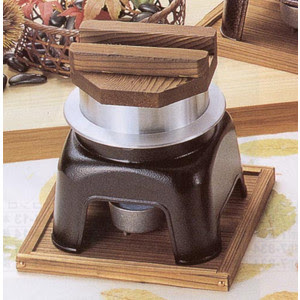
Inside is surprisingly large (deep). The front of the restaurant had tables and, in the back, (going down few steps) there was a L-shaped counter which can seat about 10 or more people. Inside the counter, there was a grill and 3 young chefs in Aburiya T-shirts busy at work. On the left side along the wall were a few shelves on which 10 or so individual "Kamameshi" 釜飯 vessels were placed. (see below, this pic is from http://store.shopping.yahoo.co.jp/kappabashi/m10-230.html).
We noticed that occasionally flames appeared under some of the "kama" vessels. This must be how they cook the individual "Kamameshi". We were advised that if we wanted Kamameshi it would take about 40 minutes so get the order in early. We were seated at the counter in front of the "sashimi" station or #1 and 2. (I specifically asked for counter seating). The chef was busy cleaning and removing the fillets from whole fish which was a good sign. I tried to engage him in conversation but he was too busy. Another chef was in charge of grilling and yet another serving up other dishes.
We started with two cold sake "Uragasumi" 浦霞 (junmai) and "Kokuryu" 黒龍 (Ginjou). They brought us a wooden box with ice in the bottom and two empty sake carafes (Probably Bizenware 備前焼 or imitation thereof—very nice). Then, they brought up the sake bottles, showed us the labels and then poured into the carafes. A very nice touch assuring us we were actually getting the sake we ordered.
We started with the sashimi three kinds (which were salmon, kampachi and flounder). The sashimi was good (although the salmon was the best sashimi which tells me that tuna and other good sashimi fish must be difficult to get or too expensive). One thing that struck us as different was the use of an artificial-appearing transparent thready thing made of agar-like material* (hope this is not plastic since I ate some of it) instead of the usual daikon "tsuma" 大根のつま garnish. We’d rather not to have any garnish than this stuff.
P.S. Later I came across this item on the Web. It is called "Kaisou-men" 海藻麺 or "Kaisou vidro" 海藻ビードロ (Vidro means "glass" in Portuguese) and made from sea weed.
Although the details of what we ate escapes me a bit, we had "smoked daikon pickles or "Iburi gakko" いぶりがっこ, homemade tofu with three different flavored salts (above picture on the right), firefly squid "okizuke" ホタルイカの沖漬け (excellent!), Tuna "nakaochi" yukke (鮪の中落ちユッケ, tuna tartar Korean style) with a porched egg or "onsen" tamago 温泉卵. This was in good quantity and tasted good. We had few more items such as pork belly "kakuni" 角煮 (we could not pass up this item, good size and melt-in-your-mouth excellent with honey-flavor). We had more sake (Dassai 獺祭50) and some more food. We were too full for any rice dish to end the evening.
This is not an authentic robatakayaki or Izakaya but it is a very nice drinking place to visit and reminds me of some high-end chain Izakayas in Japan. The counter area, at times, got sort of smoky adding to the atmosphere. There was plenty of hustle and bustle that again added nicely to the atmosphere. It was a great place to “people watch”.
Information on Aburiya Kinosuke
213 E 45th St, New York, NY 10017
212-867-5454
Aburyakinosuke.com
2. Saka mai 酒舞
Since I could not get a reservation at Sakagura, I chose this place. The name "SakaMai" usually means rice specifically grown for making sake or 酒米 but they attached the ideograms 酒舞 meaning "sake" and "dance". It is on the lower east side in an area that apparently used to be a residential with old town houses lining the side streets. The restaurant was a renovated old town house (there was apparently another restaurant at this location previously as you can see in the Google street view below). The best way to direct a taxi cab to the restaurant is to say "Please take us to Katz's delicatessen at E Houston and Ludlow. The cab dropped us off in front of the delicatessen and we worked our way through the crowd of tourists standing out front taking pictures. It was a short one and half block walk from Katz's to SakaMai. The restaurant has been in business for about 6 months according to the Japanese bartender (or mixologist as he preferred to be called) who spoke with a Japanese-British accents (spent 7 years in London) . By the way, the lot next to the SakaMai was still empty as shown in the picture below.
Once inside the restaurant, it is a totally different world from what you may have expected from the streets and exterior. Again it is a large place since it is very deep. The front part had tables and the back had a bar counter as you see below. Nice warm light wood decor. We sat at the counter.
Although we did not come for the cocktails, we decided to take advantage of the expertise of the resident mixologist. The sake based drinks were unique and delicious. My wife had "Haizakura" 灰桜 and I "Sakoudo" 酒人. "Haizakura" is composed of sake, plum wine, salted plum (umeboshi) vinegar and peach liquor. It was interesting and quite good but a bit too sweet for us. "Sakoudo" is a type of "saketini" made with sake, Hendrick's gin, mirin, orange bitters. It has a faint but unmistakable citrus note. I initially thought it had a "yuzu" flavor. I am not sure it is from the Hendrick's gin or orange bitters but must be the latter.
We then had flights (three small glasses each) of "genshu" 原酒 and "daiginjou" 大吟醸. I do not quite remember all the sake we tasted (taking pictures may have helped). One of the "Genshu" was "Kikusui" 菊水一番しぼり which was poured from an aluminum cup (one of the "cup sake") (see picture below). I do not remember the name of other two now.
The daiginjou flight included "Dassai 50" 獺祭, and Hakkaisan 八海山. We like the third diaginjou which I do not recall the name (despite my wife's telling me to remember the name). We had a cup each of daiginjou and genshu. These sake were not bad but none was extraordinary. We wished more information about the sake we tasted was provided to us especially since this is a sake bar.
For food, we started with "Kampachi" crudo. It is a small serving but nicely done. Good quality kampachi sashimi garnished with finely chopped perilla, myouga and wasabi with shoyu graze. Uni crostini was again small and grilling made the delicate flavor of uni to diminish a little. We also had egg-on-egg-on-egg (picture below). This is a very nice creative dish. Instead of a real sea urchin shell seen in the picture below, it was served in a porcelain bowl made to look like a sea urchin shell. The bottom was nice creamy scrambled egg topped with caviar and uni. You cannot go wrong with this combination but it was excellently prepared.The "chawan mushi" 茶碗蒸し was forgettable. The croquette was ordinary and we could not find any lobster meat albeit it was called lobster croquette. We also had grilled dried skate wings and renkon chips. Interestingly, the renkon chips were the only sizable appetizer we had all evening but they were crisp and addictive.
For the ending dish, we each had a pork bun which was very elegantly done. The pork filling was great--a large tender chunk of pork belly. They have a larger dish of steak and mushroom rice to be shared with 2 or three but we were stuffed so it was out of the question for us.
Information on SakaMai
157 Ludlow Street
New York, NY 10002
(646) 590-0684
sakamai.com
3. Torishin 鳥心
The last day, we went for Yakitori. We took a taxi cab. Having learned that traffic is generally bad at any time we took precautions and started early to get to our reservation on time. But, of course, this was one of those rare instances in New York when our taxi sped through the streets without slowing down (even for the stop lights) and we arrive there 30 minutes earlier that the designated time.
The outside was rather un-assuming. Since I did not take any pictures, this is from the Google maps street view (below). Once inside, the interior was quite nice with lots of light colored wood (second pics below which is from their website).
The restaurant was mostly counter seating with a few small tables. Even though it was fairly early the place was basically packed when we arrived (good thing we had a reservation). We sat at the corner of the counter next to the chef tending the grill. The menu is very close to Japanese counter parts especially those of more modern/tame chain yakitori places which have proliferated in Japan (I do not indicate a negative here, it is clean and nice).
They had a special cold sake they recommended. This is supposedly a seasonal special, un-pasteurized or "nama genshu" 生原酒 sake , I think, it was Ichino-kura namagenshu 一の蔵生原酒. There may have been "arabashiri*" 荒走り on the bottle label as well. This was quite good with nice crisp taste and clean fruity notes. Towards the end, we run out of sake and ordered a glass of "Nanbubijin daiginjou" 南部美人. They served us in a glass with a generous spillover into the "masu" ます saucer. Actually, this was the best sake for the evening.
*Arabashiri (meaning "wild runs") is the first portion of sake comes out without any pressure when it was filtered/pressed in the traditional way (not using a modern mechanized press). Supposedly it shows more wild and flavorful sake.
In front of the counter was a cold display case similar to the kinds seen in any sushi bar. Many prepared skewers were displayed inside. There were two grills (or "Yakidai" 焼き台) one near the right corner where we were seated and the other at the opposite corner.They are boasting the use of Japanese lump charcoal called "binchoutan 備長炭 which is known to burn hot. Despite the ventilation system just above the grill some smoke escaped every-now-and-then and added to the ambience but never became too smoky as can sometimes happen in small Yakitori places in Japan.
The vegetable skewers were displayed on the top of the cold case in the bamboo basket (see below, again the pic is from the Torishin website). Interestingly there was small sign in the middle of the basket saying "Display only (in English)". We thought these were fake skewers for display only (like realistic models of dishes seen in many restaurants in Japan) and admired how they looked so real. Then, we noticed the woman chef was taking theses skewers from the basket and giving them to the griller. Apparently these are real vegetable skewers. We have no idea, in that case, the meaning of the sign "Display only".
The yakitori menu is rather standard but rare parts are reserved for the "omakase " course and cannot be ordered as a-la-carte which included two kinds (from kiel and back bone) of "cartilage" 軟骨, neck meat せせり, kidney 背肝 etc. We just went with a-la-carte. the chicken liver 肝 was underdone (I am sure this was what the grill chef intended) which made us a bit uncomfortable since we had to assume they were from US chickens with the possibility of salmonella. (They said they were using "organic" chickens, whatever that means). Skin 雛皮, tail ぽんじり (ponpochi or ponjiri), heart ハツ, and tsukune つくね were good. Fatty pork belly "tontoto" 豚トロ was also good. Chicken thighs 腿 with different sauces, grilled quail eggs ウズラの卵 and ginko nuts 銀杏 were just OK. Chicken wings 手羽 were small but with a nice crispy skin and were great. As a special vegetable, they had a small radish or "ko-kabu" 小蕪 (which was simmered in dashi broth first, then grilled, and served in a small bowl with sweet miso and vinegar sauce. We were not sure if the grilling added anything. The sauce was excellent and my wife detected honey in the sauce. For vegetables (we need the nutritional balance), we ordered assorted "tsukemono" 漬物 which was a bit disappointing especially the cucumber was over pickled and too thinly sliced. I do not remember how many more skewers we ordered but the size of the skewers were quite small compared to those in many Yakitori places in Japan. As a result, we ended up eating quite a few skewers. They also have rice dishes (Donburi 丼 or rice bowl affair) but we were quite full and well-watered at this point. Instead, we went back to our hotel and enjoyed a nice glass of cava at the bar and interesting conversation with the bartender.
Information on Torishin