I bought a package of chicken drumsticks without any firm idea of how I was going to cook them. Then, I came across this recipe in the Washington Post. Since I had "figgy" cranberry sauce, I gave it a go. I served it as a drinking snack with my potato salad and coleslaw.
Since I scored around the bone, the meat shrank a bit to make a nice handle to grab and the marinade became sauce which clung to the surface.
Ingredients:
2 pounds chicken drumsticks
4 tablespoons cranberry sauce ( I used the "figgy" cranberry sauce I made).
2 tablespoons maple syrup
2 tablespoons extra-virgin olive oil
Kosher salt
Freshly ground black pepper
1 teaspoon dried sage (may substitute 1 to 2 tablespoons finely chopped fresh sage)
Directions:
1. Use a sharp chef’s knife or cleaver to cut off the end, or ankle, of each drumstick. Discard them.
2. Place the drumsticks in a gallon-size zip-top bag, along with the cranberry sauce, maple syrup, oil, a four-finger pinch each of the salt and pepper, and the sage.
3. Seal and massage through the bag to coat evenly. Lay the bag in a glass or ceramic baking dish that is large enough to hold the drumsticks in a single layer. Let sit for 1 hour at room temperature, turning the bag over a few times, or refrigerate up to overnight.
4. Preheat the oven to 375 degrees. Open and pour the contents of the bag into the baking dish, arranging the drumsticks in a single layer. Turn to coat with all the sauce you can extract from the bag.
5. Roast (top rack) for about 45 minutes, until the chicken is golden brown and cooked through, using tongs to turn the drumsticks about halfway through the oven time.
This is not bad but to us, this is a bit too sweet because of the figgy cranberry sauce and the addition of maple syrup. Certainly this would be a good finger food for a party.
Saturday, March 3, 2018
Wednesday, February 28, 2018
Double pork bowl ダブル豚丼
This is sort of leftover control but it was pretty good. On the previous weekend, we ended up getting quite a large pork loin roast. Instead of cooking all of it one way, I decided to divide it into two portions. From one half, I made several loin chops which I made into "tonkatsu" pork cutlet and from the other half, I made Japanese/Chinese style pot roast or "chasu" pork (in this version, I also used star anise). Toward the end of the week, I made this double pork bowl using both the tonkatsu and the pot roast.
I heated the tonkatsu in the toaster oven. For the pot roast pork, I added sliced onion and the pork with the cooking liquid in a small frying pan and cooked the onion until soft and the meat was heated up. I just put these two kinds of pork on a bed of rice. I poured the juice from the pan over the onion and pot roast pork, then placed the sliced tonkatsu and added tonkatsu sauce. For the green, I also added blanched broccoli.
The pot roast was the very last piece left.
As leftover control dish was pretty good.
I heated the tonkatsu in the toaster oven. For the pot roast pork, I added sliced onion and the pork with the cooking liquid in a small frying pan and cooked the onion until soft and the meat was heated up. I just put these two kinds of pork on a bed of rice. I poured the juice from the pan over the onion and pot roast pork, then placed the sliced tonkatsu and added tonkatsu sauce. For the green, I also added blanched broccoli.
The pot roast was the very last piece left.
As leftover control dish was pretty good.
Sunday, February 25, 2018
Cappuccino and the new frother カプチーノ
At home, we almost exclusively drink espresso or espresso-based coffee. On the weekend, we usually have cappuccinos in the morning with breakfast. In the late morning, we have macchiatos. Sometimes, in the afternoon, we have straight espressos.
We went though several iterations of espresso makers. We have been using an Italian-made basic espresso machine called Rancilio Silvia for more than 10 years. We are on the 4th and probably best model we have had. Before this one, we used Gaggia classic which also made decent espresso coffee. Silvia is a totally manual model without anything automatic or fancy. It has only one boiler so you have to wait (probably close to 1 minute) for the boiler to heat up for steaming the milk after brewing the coffee.
It requires some effort but it does make a good espresso and also steam. It froths the milk adequately for cappuccino and latte. I have replaced and upgraded parts during the year but one advantage of owning Silvia is many 3rd party tune-up/ improvement parts in addition to the replacement parts are readily available. One noteworthy is the flat shower screen (with flat screw head). Being an Italian machine, the screw head of the original shower screen protruded which made an indentation mark and broke the integrity of surface of the coffee pack (since the Italian method does not make a "pack" of coffee grind but uses loose coffee when brewing espresso, this may not be a problem for them).
The frother of Silvia is a no-frill basic steam wand and requires some practice to make nice froth but the froth is not as stable or creamy as one made with a commercial espresso machine. Recently, I got a milk frother Nespresso Aeraoccino4 and it works really well. It is rather small and I have to run it twice for 2 cups of cappuccino or latte but it can make small amounts of frothed cream for macchiato. the Breville model can handle larger amounts but not a small amount of cream for macchiato.
To prevent overflowing, it is important not to overfill beyond the max line for frothing milk. It does produce a very creamy stable foam and heats up the milk nicely.
The picture below shows the pattern on the crema indicating good extraction. Silvia is very pesky to have a perfect dose and grind. I use low-speed bur grinder Rancillio Rocky grinder to get the perfect fineness of the coffee grinds. I tamp it only lightly. The machine also requires regular cleaning (back flush using a blank back flush basket with detergent - I use Cafiza) once a week and descale the machine using espresso decalcifier/descaler once a month. Since I use reverse osmosis filtered water, I do not have much of a calcium deposit problem. There are articles explaining how to make good espresso using Rancilio Silvia.
We get green beans (several espresso blends) and roast them at home (using both hot air and direct heat drum roasters) but that is for another time.
We went though several iterations of espresso makers. We have been using an Italian-made basic espresso machine called Rancilio Silvia for more than 10 years. We are on the 4th and probably best model we have had. Before this one, we used Gaggia classic which also made decent espresso coffee. Silvia is a totally manual model without anything automatic or fancy. It has only one boiler so you have to wait (probably close to 1 minute) for the boiler to heat up for steaming the milk after brewing the coffee.
It requires some effort but it does make a good espresso and also steam. It froths the milk adequately for cappuccino and latte. I have replaced and upgraded parts during the year but one advantage of owning Silvia is many 3rd party tune-up/ improvement parts in addition to the replacement parts are readily available. One noteworthy is the flat shower screen (with flat screw head). Being an Italian machine, the screw head of the original shower screen protruded which made an indentation mark and broke the integrity of surface of the coffee pack (since the Italian method does not make a "pack" of coffee grind but uses loose coffee when brewing espresso, this may not be a problem for them).
The frother of Silvia is a no-frill basic steam wand and requires some practice to make nice froth but the froth is not as stable or creamy as one made with a commercial espresso machine. Recently, I got a milk frother Nespresso Aeraoccino4 and it works really well. It is rather small and I have to run it twice for 2 cups of cappuccino or latte but it can make small amounts of frothed cream for macchiato. the Breville model can handle larger amounts but not a small amount of cream for macchiato.
To prevent overflowing, it is important not to overfill beyond the max line for frothing milk. It does produce a very creamy stable foam and heats up the milk nicely.
The picture below shows the pattern on the crema indicating good extraction. Silvia is very pesky to have a perfect dose and grind. I use low-speed bur grinder Rancillio Rocky grinder to get the perfect fineness of the coffee grinds. I tamp it only lightly. The machine also requires regular cleaning (back flush using a blank back flush basket with detergent - I use Cafiza) once a week and descale the machine using espresso decalcifier/descaler once a month. Since I use reverse osmosis filtered water, I do not have much of a calcium deposit problem. There are articles explaining how to make good espresso using Rancilio Silvia.
We get green beans (several espresso blends) and roast them at home (using both hot air and direct heat drum roasters) but that is for another time.
Thursday, February 22, 2018
Braised Japanese sweet yam with pork さつま芋と豚肉のきんぴら
I made this dish since we had leftover Japanese sweet yam. I braised this like I would "gobo" burdock root.
I could have added deep fried tofu or abura-age to the dish to make it vegetarian but I used strips of pork instead and garnished it with black sesame (white sesame may have been better).
Ingredients:
Japanese "satsumaimo" sweet yam, washed and thinly sliced and then julienned (amount arbitrary, here I used 1/3 of medium yam)
Pork cut into strips (again the amount is arbitrary, I used pork tenderloin but pork belly would be better).
2 tsp peanuts oil and 1/4 tsp of dark sesame oil
2 tsp each of soy sauce and mirin
Directions:
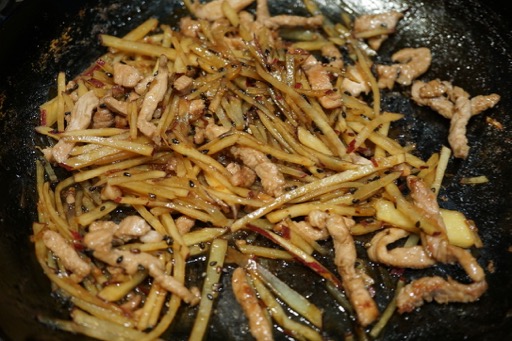
In a wok, add oil and heat up on medium high flame. Once the oil is heated up, add the pork and stir until the color changes. Add the sweet yam and stir to coat (below picture).
Add the mirin and then the soy sauce and braise until most of the liquid is gone (see below).
Compared to a classic burdock root kinpira, this one is still bit crunchy and fresh tasting. Perfect small dish for Japanese sake.
I could have added deep fried tofu or abura-age to the dish to make it vegetarian but I used strips of pork instead and garnished it with black sesame (white sesame may have been better).
Ingredients:
Japanese "satsumaimo" sweet yam, washed and thinly sliced and then julienned (amount arbitrary, here I used 1/3 of medium yam)
Pork cut into strips (again the amount is arbitrary, I used pork tenderloin but pork belly would be better).
2 tsp peanuts oil and 1/4 tsp of dark sesame oil
2 tsp each of soy sauce and mirin
Directions:
In a wok, add oil and heat up on medium high flame. Once the oil is heated up, add the pork and stir until the color changes. Add the sweet yam and stir to coat (below picture).
Add the mirin and then the soy sauce and braise until most of the liquid is gone (see below).
Compared to a classic burdock root kinpira, this one is still bit crunchy and fresh tasting. Perfect small dish for Japanese sake.
Monday, February 19, 2018
PA Dutch Oatmeal cookies オートミールクッキー
After making oatmeal for breakfast, my wife remembered that she used to make oatmeal cookies based on PA Dutch recipe from an old PA dutch cookbook she has had forever. She has not made this for long time for some reason, so she decided to see if they were as good as she remembered. They were! This cookie has a nice soft texture and is an excellent cookie with tea.
The oatmeal, raisins and nuts make this cookie.
Ingredients:
1 cup butter (or shortening)
1 1/2 cup packed brown sugar
2 eggs
2 cups flour
1/2 Tsp. baking soda
2 Tsp. baking powder
1/2 Tsp. salt
1 Tsp. ground cinnamon
1/2 Tsp. grorund cloves
1/2 Tsp. nutmeg
1 Tsp. vanilla
2/3 cup buttermilk
1 1/2 cup uncooked rolled oats
1 cup raisins
1 cup chopped nuts (I used walnuts toasted)
Directions:
Toast the oats in the toaster oven stirring frequently until light lightly browned and fragrant.
Toast the walnuts and remove brown skin by rubbing in a dish towel. Let them cool.
Cream butter and sugar together until fluffy. Add eggs in thirds beating well after each addition.
Add dry ingredients including the oats alternately with the buttermilk, mixing until blended after each addition. Blend in the nuts.
Drop by teaspoonful onto creased cooked sheets. Bake at 350 degrees F for about 15 minutes.
Eating this cookie was like meeting an old friend you haven't seen for awhile. It was as good as we remembered; one of the best cookies ever (not to "oversell" it, of course). It has a soft texture, the oatmeal gives it a bit of "tooth" and the toasted nuts a burst of flavor and crunch. The spices give it a complex range of flavors. Wonder why we stopped making these? Having dusted off the recipe we will be making more...since the ones we just made are almost gone.
The oatmeal, raisins and nuts make this cookie.
Ingredients:
1 cup butter (or shortening)
1 1/2 cup packed brown sugar
2 eggs
2 cups flour
1/2 Tsp. baking soda
2 Tsp. baking powder
1/2 Tsp. salt
1 Tsp. ground cinnamon
1/2 Tsp. grorund cloves
1/2 Tsp. nutmeg
1 Tsp. vanilla
2/3 cup buttermilk
1 1/2 cup uncooked rolled oats
1 cup raisins
1 cup chopped nuts (I used walnuts toasted)
Directions:
Toast the oats in the toaster oven stirring frequently until light lightly browned and fragrant.
Toast the walnuts and remove brown skin by rubbing in a dish towel. Let them cool.
Cream butter and sugar together until fluffy. Add eggs in thirds beating well after each addition.
Add dry ingredients including the oats alternately with the buttermilk, mixing until blended after each addition. Blend in the nuts.
Drop by teaspoonful onto creased cooked sheets. Bake at 350 degrees F for about 15 minutes.
Eating this cookie was like meeting an old friend you haven't seen for awhile. It was as good as we remembered; one of the best cookies ever (not to "oversell" it, of course). It has a soft texture, the oatmeal gives it a bit of "tooth" and the toasted nuts a burst of flavor and crunch. The spices give it a complex range of flavors. Wonder why we stopped making these? Having dusted off the recipe we will be making more...since the ones we just made are almost gone.
Subscribe to:
Comments (Atom)