Showing posts sorted by relevance for query dengaku. Sort by date Show all posts

Friday, October 3, 2025

Green Yuzu, “Kinome” Japanse pepper leaves 青柚子と木の芽

We mail-ordered Japanese vegetables from “Suzuki Farm” in Delaware for the first time. Since the farm is located in Delaware, UPS ground shipping is essentially overnight. We ordered several items: 1) Japanese cucumber, 2)“Mizu-nasu 水茄子” which is a special type of Japanese eggplant, 3) “Kinome 木の芽”, the young twigs/leaves from the Japanese “Sansho” 山椒 pepper tree, 4) green Yuzu citrus 青柚子 , and 5) “Shishi-togarashi シシとう” a type of (usually not spicy) Japanese green pepper. We also received two Zucchini (freebees).  In the past we could occasionally get some of these vegetables (except for the fresh yuzu and kino-me). I previously posted the recipes I made with them. The vegetables from Suzuki farm, however, were extremely fresh.

For some time, I have wanted to plant a Japanese pepper tree so that we could get the young leaves/tips called “kino-me 木の芽” which means “tree sprouts” to use as a flavoring. These sprouts have a distinctive smell and flavor which compliments many Japanese dishes. Likewise yuzu is a Japanese citrus that also has it’s own distinctive smell and flavor. (Previously, I have only been able to get frozen chopped-up yellow yuzu skin). The ripe yuzu is yellow but the unripe or young yuzu is green (Japanese often call “green” as “blue” and  “green yuzu” is called “ao-yuzu 青柚子” literally meaning “blue yuzu”). Ao-yuzu zest is actually stronger in flavor than yellow yuzu.

So, the first batch of dishes I made included “miso sauces” one made with the kinome and one with the yuzu. I cooked two medallion shape pieces of the mizu-nasu (even though it can be eaten raw) and topped one with the kinome miso (right in #1) the other with Yuzu miso (left in #1) essentially making a japanese dish called “nasu dengaku ナスの田楽”. Although using mizu-nasu for dengaku is a bit of a sacrilege, the two pieces I made were exquisite.  Each miso imparted the distinctive flavor of yuzu or kinome” with which it was made. They went perfectly with the flavor and texture of the cooked eggplant. Since misu-nasu can be enjoyed “raw”, I amended my “sacrilege” by using it raw in the second dish I made. This was an “asazuke 浅漬け” which is a raw vegetable (in this case the misu-nasu) salted/or pickled for only a few hours in a brine. I served the asazuke with the dengaku (#1 upper right).


Since we got two good size fresh whole Spanish mackerels from Whole Foods a few days ago, I made my usual “mackerel simmered in miso sauce 鯖の味噌煮”, I garnished this with a few leaves of the kinome (#2).


This picture shows part of the kinome we received (#3). Although the left most stalk has the classic or most desirable appearance of kinome, all had a nice distinctive smell/flavor. Ao-yuzu was labelled as  “mame-yuzu マメゆず” by the farm (“mame” mens “beans” and also “small”) (#4).


1. “Kino-me miso 木の芽味噌”
Ingredients:
90 gram Saikyo miso 西京味噌 (Kyoto-style sweet white miso)
10 grams sugar (or more if you like sweet)
1 tbs mirin
1 tbs sake
1 egg yolk
Kinome (as much as you like)

Directions:
Mix the miso and egg yolk in a small sauce pan
Add the remaining seasonings 
Place the pan on low flame and mix constantly with a silicon spatula
Once the miso mixture is heated up, taste and adjust the sugar and the consistency by adding more sake or water.
Remove the leaves from the stem of the kinome and grind up using Japanese mortar and pestle
Add the miso mixture and mix well
Let it cool and refrigerate

2. “Yuzu miso 柚子味噌”
Ingredients:
50 grams Awase-miso 合わせみそ(blend of red and white miso, you can buy it as a type of miso in a package) or red miso.
10 grams sugar or more (if you prefer)
1 tbs mirin or more to adjust the consistency
zest from one green yuzu, grated using a micrograter
Juice from one yuzu

Directions:
Mix the miso and the seasonings in a small sauce pan and mix
Place the pan on a low flame and mix constantly with a silicon spatula
Once the miso mixture is heated up, taste and adjust the sugar and the consistency by adding more sake or water.
Let it cool and refrigerate

3. Eggplant “dengaku” ナスの田楽 (Although I used “misu-nasu” other kinds of eggplant may be more appropriate.)

Cut two medallions from the eggplant about 1/2 inch thick, coat them with olive oil and either pan fry or cook in a toaster oven for a few minutes

Place the eggplant medallions on an aluminum foil covered tray and top with a layer of the flavored miso. Cook in a toaster oven until the miso is bubbling.

Although these are dishes I made before, the addition of fresh yuzu zest and kinome really made them much better.


Saturday, October 17, 2009

Grilled Tofu with miso 豆腐の味噌田楽

This is also a classic small dish perfect for Home Izakaya. I am not going to get into a lengthy discussion of how this type of dish came to be called "dengaku" 田楽. The name reportedly came from the appearance of the dish (square with skewers) which resembles a small stage on stilts set up in a rice paddy. Music and dance were performed on this stage for a rustic rice planting cerebration in old Japan which is called "dengaku", translated as "enjoyment in a rice paddy". Small portions of tofu, potato, egg plant, "kon-nyaku" or other vegetable are placed on a skewer and grilled with some type of sauce (miso-based is most common). Some items such as potato may need to be pre-cooked before it is grilled. This dish is a sort of snack on a stick, Japanese style.

 Here, I used a "firm" or "momen-goshi" tofu. I drained it and placed it between paper towels with some weight on it, not too heavy, for 5-10 minutes to remove additional water. I then cut it into small rectangles. I broiled it (without the skewer because the skewer might burn) in an oven with high heat--placing it very close to the heating elements so that the surface browns as the tofu is warmed through. Turn over once. You can also cook it on a grill or in a toaster oven. Take it out and coat the upper surface with a generous amount of a miso sauce which I described before. This one was made with sugar, sake, dashi, sesame paste, lime juice and grated lime and lemon zests (additional lime zest was added later as garnish as shown above). Put it back under the broiler for a few minutes until the sauce bubbles and gets nicely brown. If you use a grill, you could use a kitchen torch to brown the miso sauce.  Browning the miso sauce is important as it will make the miso fragrant. Put the skewer in as shown above.  The skewer is a sort of decoration here but to qualify for a "dengaku" dish you will need a skewer for the reason described above. Besides, it also allows you to pick it up by hand. Serve immediately while hot.

Classically,"kinome" should be used as a garnish--it looks very nice and has a distinctive flavor. But "kinome" is very difficult to come by in the U.S., unless you have a "sansho" or "Sichuan or Japanese pepper" tree in your backyard. "kinome" is the young shoot of this tree. As long as you do not add any meat or egg yolk to the miso sauce (which are common variations of this type of miso sauce) and use kelp or vegetable dashi broth, this dish is strictly vegetarian.

I served this with a American mini cucumber cut in "jabara" or a snake belly style with a sweet miso sauce.

Friday, September 1, 2017

Kamo eggplant with pork miso stuffing 賀茂茄子の肉味噌詰め

The other day, I found a round Japanese eggplant at our Japanese grocery store. This was either Kamo-nasu 加茂茄子 or Mizu-nasu 水茄子  but it had no label. I asked the cashier and was told it was "Kamo-nasu". Kamo-nasu is often used in Kyoto cuisine 京都料理 and has a nice firm flesh. Dengaku 田楽 is the most common way to serve this vegetable. (While I am writing this I realized I never posted eggplant "dengaku". When I made this, I thought I must have already posted the usual miso-dengaku and decided to make this variation using pork meat).


It is miso flavored but I also added ground pork and white sesame paste. I garnished it with roasted white sesame seeds.


I served this one evening with pork belly "Kakuni" 豚の角煮 I made recently.


Ingredients:
One Kamo-nasu (#1) (or you can use regular American eggplant), cut into four disks after removing the skin in an alternate pattern. I removed some of the flesh of the eggplant to make space for the stuffing (#2).
Light olive oil, as need, to bake the eggplant (or you could deep fry).

For stuffing:
1/4 lb of ground pork (I used trimming from pork tenderloins and hand chopped)
1/4 tsp finely chopped ginger
1/4 tsp finely chopped garlic
2 tbs miso (I used white miso)
2 tbs mirin
2 tbs sake
1 tsp roasted white sesame paste "nerigoma" 練りゴマ.
1/2 tsp of dark roasted sesame oil
1 tsp vegetable oil
Finely chopped flesh removed from the eggplant as discussed above.
1 tsp potato starch slurry (potato starch and sake in equal amount)


Directions:
For eggplant,
I decided to bake rather than either cook in a frying pan with oil or deep fry.
I lined the baking sheet with aluminum foil and coated with the olive oil.
I painted all the surfaces of the eggplant slices with the oil and baked at 350F for 30 minutes in the toaster oven (convection mode) (#3 and 4 above).

For stuffing:
In a non-stick frying pan, I added the vegetable and sesame oil on low flame and sautéed the ginger and garlic until fragrant. I added the finely diced flesh of eggplant, pork and turned up the flame and cooked the meat until cooked and separated.
I first loosened the miso with sake and mirin by adding the liquid in increments while mixing in a separate container. I added the sugar and mixed well. (If the consistency was not liquid enough, add water or more sake).
I added the sauce into the cooked meat mixture and cooked until the liquid was reduced in half about 10 minutes.
I added the sesame paste and a splash of sesame oil and mixed well.
I tasted the stuffing (you can adjust sweetness by adding more sugar or mirin at this point).
I finished with the potato starch slurry to thicken the stuffing. Make sure to cook for about one minute before cutting off the flame.

Assembly:
I kept both the baked eggplant and the stuffing in the refrigerator until just before serving.
I layered the miso-pork stuffing on the top of the eggplant slices and placed in a preheated 350F toaster oven for 15 minutes or until warmed up completely.
I garnished with sesame seeds and served hot.

This was very good. The eggplant was soft and sweet which was well complemented by the ginger miso and pork flavors of the stuffing. The only problem was the skin of the eggplant--it was tough. I could probably leave the skin alone rather than making an alternate peeling pattern since we had to remove the skin to eat the eggplant anyway. This combination of the pork belly dish and the miso-pork stuffing dish went very well together.

Saturday, May 22, 2010

Sushi Taro, Dupont Circle, Washington DC 寿司太郎

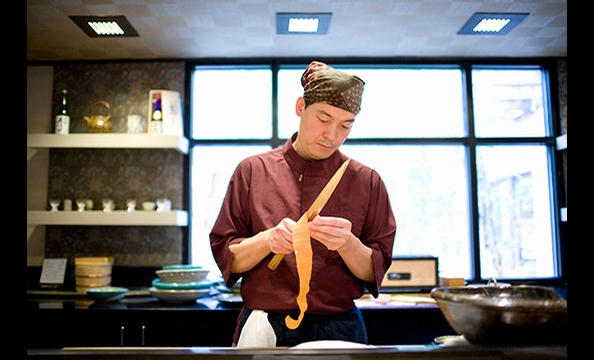
The Dupont Circle area has undergone significant change over the years and is now a very vibrant neighborhood with numerous good restaurants. It also was my wife's old stomping grounds. This Japanese restaurant, Sushi Taro, used to be your usual run-of-the mill sushi bar/ tempura place. It occupies the second floor of an unassuming brown square building at the corner of 17th and P, with a CVS Drug store on the ground level. Last year it went though a major renovation, when the old owner's son, Nobu Yamazaki (pictured below), took over. He transformed the place into a high-end Kaiseki and Omakase Japanese restaurant. We went to the old Sushi Taro a few times and were not particularly impressed. It was a very ordinary sushi bar. After this drastic transformation, however, we have been back three times; twice for sushi omakase and once for regular Kaiseki omakase.

Sushi omakase takes place in a room, separated from the main dining area, with a light-colored wood counter which only seats 6, Nobu himself and Chef de cuisin Masa Kitayama are behind the counter, where the cooking area is rather large with a charcoal burning Konro grill (exactly the same as the one we have) in the back counter in front of a picture window overlooking a stand of bamboo. The setting is very similar to a high-end sushi bar in Japan as described by Jon. The atmosphere is very intimate and quiet. With capacity for only six customers, the customers have the complete attention of the chefs. The night we were there only 4 customers, including ourselves, were in attendance. This time we feasted for over 3 hours with 12 courses--and this is not counting each individual piece of sashimi and sushi. This feast was much more than sushi and sashimi omakase as you will see.  

(From Washington post)

This time we started off with home-made umeshu 梅酒 aperitif with green plum simmered  in syrup or "kanroni" 青梅の甘露煮, a very nice refreshing start, which was followed by their signature appetizer Gomadofu 胡麻豆腐 topped with Maine sea urchin, real wasabi (every time wasabi was served, our chef grated a wasabi daikon root with a traditional sharkskin grater--the difference between this wasabi and the usual fake one from the tube was remarkable). Since it was in season, the next was Junsai ジュンサイ in sweet vinegar and yuzu 柚子. Junsai was very fresh with thick gelatinous layers. It matched perfectly with gentle sweet vinegar sauce highlighted with a bright yuzu flavor. (Masa showed us the fresh yuzu they had just received--the very small green kind). We then moved to a simmered dish; Hiryouzu 飛龍頭 and shrimp shinjou 海老しんじょう in yuba 湯葉 sauce. This was a nice comforting dish and well-prepared, if not spectacular. Next came a huge and fresh Pacific oyster (cut into three pieces) from Washington State, Japanese call it Iwagaki oyster 岩牡蛎, on the half shell with a lemon wedge and okinawan salt. This was so good (you may have noticed we are partial to raw oysters). It went so well with the sake we were drinking; a nice fresh ocean taste and, without any special sauce or seasoning, it  lingered pleasantly in the mouth for a while. Again seasonality is important here. "Ayu" 鮎 is in season. Japanese, especially Kyotoites, are very fond of this small fresh water river fish and we had this fish quite a few times in Kyoto. The Ayu which had been marinated very delicately in soy sauce and sake 祐庵地 was served butterflied and grilled 鮎の開き祐庵焼き. I like this rendition much better than the customary "shioyaki"塩焼き or salt grilled, which is usually served on a bed of salt and pine needles. Somewhere between these dishes, we had assorted "Hassun" appetizers 八寸 with 8 small tasty morsels; kinome-miso dengaku 木の芽味噌田楽, "aburana" with yuzu-miso アブラナの柚子味噌和え, lightly marinated firefly squid 蛍イカの沖漬け, "tamago-dofu" 卵豆腐, a small savory egg custard square with edamame paste, salt-cured shirako 白子 with vinegard daikon strips, garlic sprouts 芽ニンニク with miso-marinated Manila clams. All were fantastic. The only slight disappointment being the dengaku due to the quality of the tofu which could have been better. The salt cured "Shirako" or cod sperm sac (which does not sound appetizing) was delicate and tasty.

At this point, we were presented with two choices; one was "Lobster" shabushabu and the other was a Japanese style snapping turtle soup スッポンのお吸い物. Without hesitation, we took the snapping turtle. This was quite a soup; mine had one of the legs and my wife's had nice meaty parts. The broth was very savory. Yet the shimmering liquid in the bowl did not completely cover up the underlying primordial reptilian taste suggestive of mysteriously lurking depths of the pond. This does not taste like a chicken for sure. Since I got the leg, I had to spit out the "nails" as I chowed down. 

Since I made the reservation directly with Chef Masa and mentioned that the last time we were there we liked his home-made "Karasumi" からすみ, he gave us a small slice of that dreaded "Funazushi" フナ寿司 which was marinated with sake lee. Marinating in sake lee or "Sake kasu" 酒粕 made it very palatable (actually good). It had a similar texture and taste to "Karasumi". What a personal service! 

Then, we were presented with several square lacquer boxes of today's sashimi items. One box was all "hikarimonoayu" offered as sashimi. We started with a series of sashimi, very small but carefully prepared pieces; tuna around this time of year was less fatty and firm but very tasty. Again, freshly grated wasabi was just so nice. We can not remember every pieces we had but other stand-outs are "sayori" or needle fish, "Ayu" served two ways (one as is-just salt cured, and the other mixed with salted and preserved ayu innards called "Uruka" うるか. Ayu innards are cherished for their slightly bitter taste. Uruka definitely added a salty and slight bitter taste but it was a nice combination of tastes. I can not forget the wild white salmon from Alaska. Very tasty. Oh, one more item worth mentioning is, again in season, bonito "katsuo" 鰹 which was lightly grilled on a charcoal fire (Tataki) and served in a separate bowl with grated garlic and ginger; nice meaty slices and very flavourful. I have eaten a great deal of sashimi in my day but somehow this was especially good. Between the sashimi and sushi course we were offered a small delicately done "Sayori tempura" with perilla leaves さよりの天ぷら. At this point we were so full it was an effort to finish the sushi. Masa responded by making the rice ball very small for us and we had 4-5 pieces of yummy sushi. 

Finally, we were presented with the desert menu. We picked a Japanese "purin" custard, "kurosatou" or dark sugar (from Okinawa) ice cream. Both were very good but we particularly liked the very delicate Japanese custard.

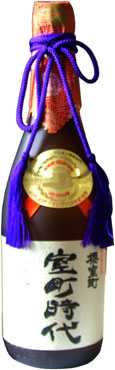
I just want to mention sakes we tasted at Sushi Taro on three occasions. The sake list is not extremely long but quite decent covering from the high-end to moderate. Among the ones we tasted; Muromachi Jidai 室町時代 (Junmai Supreme-Daigijo or Kiwami-daiginjo), Hakkaisan 八海山 (Ginjou), Kubota Hekiju 久保田 蒼寿 (Junmai Daiginjou), Dassai23 獺祭 (Junmai Daiginjo) and Hakuryu 白龍 (Daiginjo). By far, "Muromachi Jidai" is our favorite. Complex yet clean tasting and it is just cut above. Next will be Dassai23. Not as complex but very pleasant and clean. Hakkaisan is a bit too yeasty to our taste. Kubota has some muddy note and Hakuryu is rather simplistic.
In summary, we really like this place. This is one of the best restaurants we have eaten at both here and in Japan. They serve very traditional carefully created food with a keen sense of seasonality ("Shun" 旬) and the sake selection is quite decent. The only problem for us (if you can even call it a problem for most people) is that we get so full by the end of the feast in both Sushi omakase and regular Kaiseki. It is a bit expensive but a similar class restaurant in Japan will certainly cost much more.

Friday, March 5, 2010

Japanese winter stew おでん

"Oden" おでん is classic Izakaya food. Yakitori 焼き鳥 and oden are the two main pillars of drinking food in Japan.  Although any given Izakaya may serve up oden and/or yakitori among other items,  there are drinking places specialized just in "oden" or "yakitori".  Often I used to go to a drinking place that specialized in oden, "oden-ya" おでん屋, in Sapporo, called "Katsu-ya" かつや.  The original and name-sake proprietor has passed away, and it has moved from a quaint blind alley off the Oodouri 大通 to the basement floor of a building near Sapporo train station. One of her daughters has taken over the business. It appears that the quality of the oden and atmosphere are unchanged. It is still a very cosy welcoming place and always very crowded with salary men on the way home. I found the image of inside Katsuya on the Internet in one of the blogs (hope the author will not mind my using his picture here). Once, my wife and I visited Katsuya in this new location long time ago when we visited Sapporo. This picture really brings back memories.
かつや

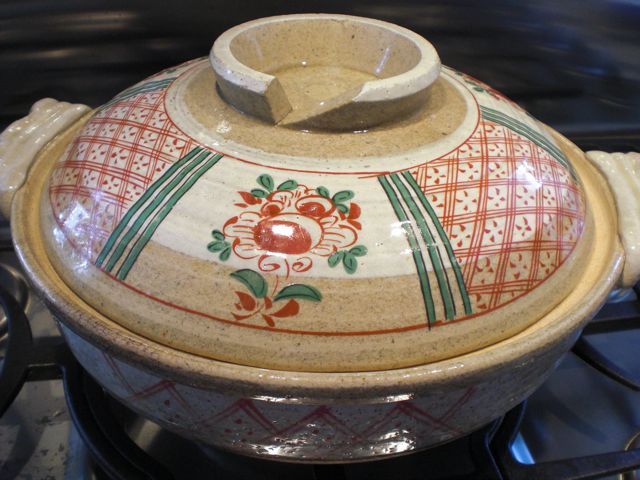
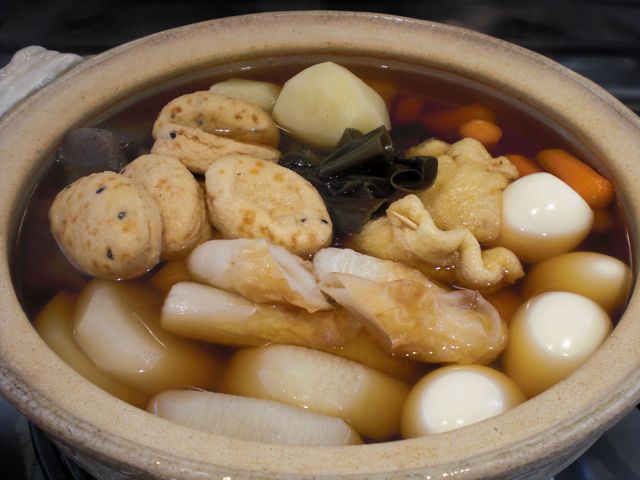
"Oden" was said to be derived from "dengaku" 田楽 which I posted before. Dengaku is skewered squares of tofu, konnyaku and vegetables grilled and then eaten with miso-based sauce. Later, after the invention of soy sauce, instead of grilling, skewered items are cooked in a soy sauce flavored broth. Eventually, it lost even the skewers (some oden items, such as meatballs-- two or three skewered together, still keep their skewers). There are many variations including regional differences in oden. My oden is definitely influenced by the types of oden Katsuya served. In commercial establishments like Katsuya, they have a large stainless steel vats with multiple segments so that different items will not mix and cook properly as seen above, but at home, it is most common to use a large donabe 土鍋 or earthen pot like the one I used (below). You could use any pot with a wide opening. You could place a portable cooker on the table, place the pot on the cooker and let diners serve themselves. I ususally cook oden on the stove and serve whichever items I like on a plate returning frequently for a subsequent selection of different items. One of the reasons for this is that we rarely sit at the table to eat. I cut some of the items such as eggs and "Kinchaku" (see below) using a pair of kitchen scissors to make it easier to eat with chopsticks.

I usually prepare oden in the order below at least several hours before serving.

Broth: I used a piece of kelp (2x8 inches) which was first soaked in water for 30-40 minutes or longer (4 cups or about 1 liter) or whatever amount is appropriate for your vessel. I then put the pot on a medium low flame. When it comes to a boil, I reduce the flame to very low and add dried bonito flakes or "Kezuri (katsuo)bushi" 削り(鰹)節. I use a special large teabag-like bag called "Dashi bukuro" だし袋 in which the bonito flakes are placed and the opening sealed (about 20 grams). This is just for convenience so that I do not have to filter the broth later (I usually take out the bag with bonito flakes when the vegetables are all cooked). You could just put the bonito flakes in the pot and simmer for 10-20 minutes and then strain using a fine mesh strainer. You could also set aside a portion of unseasoned broth just in case the broth get too salty.

Daikon 大根: Daikon is a must in any oden and requires some preparation. I peel the skin and cut the peeled diakon into 1 to 1.5 inch thick rounds and bevel the sharp edges, mentori 面取り. I pre-cook the daikon in a separate pot with enough water to cover the daikon and one pinch of raw rice grains for 20-30 minutes and then transfer to the oden pot.

Carrot and potato: These items may not be most common items in oden but "Katsu-ya" served them and we like them very much. Just peel and cut into the size you like (not too small) and bevel the sharp edges and place it in the oden pot.

Boiled eggs: This is also the must-have item. I just boil eggs for 10 minutes, peel and place them in the oden pot.

Konnyaku コンニャク: It does not have much taste on its own and it is mostly for texture.  most of Westerners will not appreciate this item but it is nonetheless a classic oden item. I make multiple shallow crosshatch cuts on both sides so that the broth will penetrate better. I then cut it into bite sized pieces (I cut this into a triangle which is traditional) then, par-boil it in plenty of water for one or two minutes. I drain the konnyaku and then place it in the oden pot.

Seasoning: At this point, I  season the broth. I use soy sauce, mirin, sake and salt (I use salt to prevent the broth from becoming too dark which would happen if I added too much soy sauce to get the desired saltiness especially because I usually use a reduced salt soy sauce. Alternatively, you could use "light colored" soy sauce or "usukuchi shouyu" 薄口醤油. You may even like a dark broth, in that case, just use soy sauce. I cannot give you an exact amount but I will err on the side of under seasoning and go light on mirin (Vegetables add some pleasant natural sweetness). You can always adjust the seasoning later.

Now, I put on the lid and let it simmer about 1 hour. It really should not boil at any time. After the vegetables are cooked and soft, I add more items listed below which do not require long cooking. If they were frozen, thaw first and the items which have been previously deep fried should be treated by pouring hot water over them in a colander (called "abura-nuki" 油抜き) to remove any excess oil and off flavor before adding to the pot.

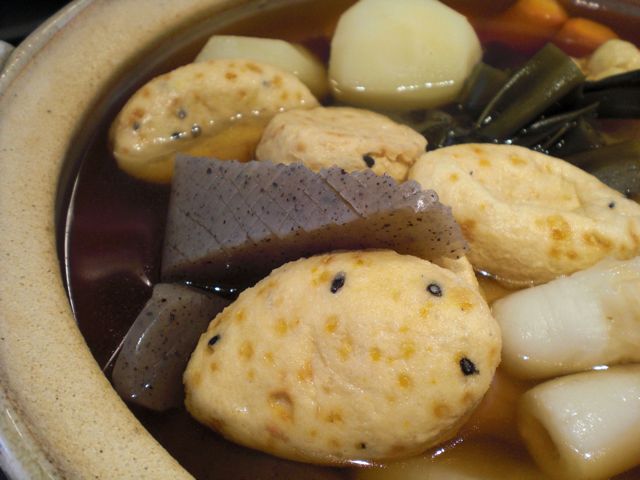
Chikuwa 竹輪: Cylinder-shaped fish cake (ground white fish meat with some binder and seasoning is boiled and lightly grilled and is sold frozen here in the U.S.) with a hole in the center shaped like a bamboo. Cut diagonally in the center (in the picture above it is shown in the center of the pot above the Daikon.  In the picture below it is shown on the lower right).

Ganmodoki がんもどき: Deep fried oval patty made of tofu, egg white, black sesame seeds and other shredded vegetables (tan oval item with black specs -sesame seeds- in the picture below). Often, this is shortened as "ganmo".

Mochi in fried tofu pouch or mochi kinchaku 餅巾着
: "Kinchaku" is a transitional Japanese purse. If you stuff anything in a tofu pouch or "Abura-age" 油揚げ, it is called "Kinchaku". Mochi 餅 is a rice cake made of pounded cooked rice.  I cut one end of a small rectangular abura-age and place mochi inside and close the pouch with tooth picks (This pouch is shown between the eggs and kelp in the picture above). This is the same type of preparation I do for the new year soup. (If you are an oden officinado, you would order this item using its short form name "mochikin"). After 5-10 minutes, the mochi will become soft and sticky but contained in the tofu pouch it is easier to eat. (They are seen in the picture above between eggs and kelp.)

Tied kelp 結び昆布: I happend to find this kelp preparation in a bag (cut in small size, tied in knots, steamed and dried) called "Musubi Konbu" or tied kelp at a Japanse grocery store. I put them in the pot after hydrating for 15 minutes. It does not taste that good and disintegrated after some time so this is the first and will be the last time I use this.

In the above picture, the dark triangles are konnyuku, tan oval ones with black specks (sesame seeds) are ganmodoki and tubes on the right are chikuwa. In the back, you see potato, kelp,  and carrot.
Just 10 minutes before serving, I add large cubes of tofu. Tofu should just be warmed through.  As seen in the above picture, I garnish the tofu with chopped chives (or scallion). the daikon here is very soft and you can cut it with just chopsticks. The yellow stuff at the far right corner is Japanse mustard which is very hot but a necessary condiment for oden.

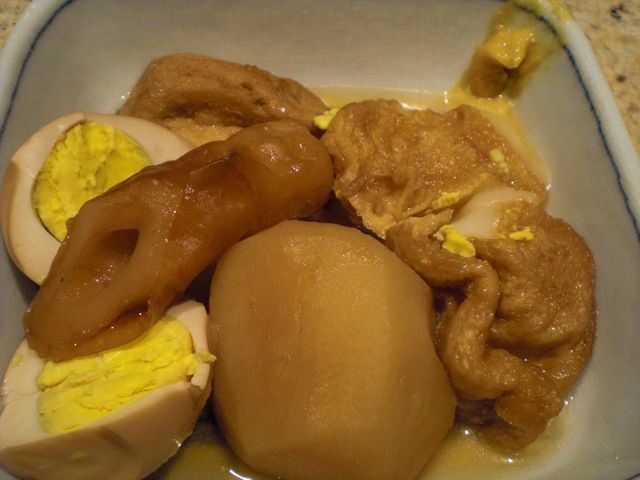
Eggs are wonderful especially the egg yolks mixed into some of the broth and mustard. In the above picture, on the right is "mochi kinchaku", which is cut and showing the mochi inside. Between the eggs is chikuwa and the center front is potato.

This is a perfect dish for cold winter days with sake. Warmed sake is the classic accompaniment but we like cold sake even with oden. Depending on what you like, you could use many other items in oden such as tough sinewy parts of beef, "Gyu-suji" 牛筋 cooked for long time, octopus leg "Tako" 鮹 (these are Kansai 関西 or West of Japan items), thick Japanese omelets with crab meat ("Kanitama" かに玉), many other types of fishcakes especailly white soft square ones called "Hanpen" はんぺん, and satsuma-age 薩摩揚げ. A bit unusual are "tara no shirako" タラの白子, which is the sperm sac of cod fish (It does not sound appetizing but it does taste very good), a Japanese style stuffed cabbage ロールキャベツ, a type of small conch or sea snail called "Tsubu" つぶ and so on. We really like oden but only problem for us is that there are so many goodies in one pot and it fill us up too quickly.

Thursday, April 3, 2014

Party platters from Tako Grill タコグリルからのパーティープラター

On our last trip to Japan we, of course, visited my mother. We offered to take my mother and her two sisters (my aunts) out for lunch, but she said it was easier and more relaxing if we just stayed in and had the get-together at the house. My mother then produced a flyer she had just received from a chain sushi restaurant called "Kaisen-maru" 海鮮丸. Although she had not tried them before, she suggested that we order a sushi platter for our “aunts’ luncheon party. Just one phone call and a few hours later, a very polite and professional young man appeared at the front door with a large sushi platter and an order of chawanmushi 茶碗蒸し(still warm). (The choice of '”side” was miso soup or chawanmushi). He collected the money (a very reasonable price) and said "please leave the empty sushi-oke and bowls outside the front door when you finish". He added that he would come back later and collect them; which he did--they quietly disappeared soon after we put them out. The degree of service was just amazing (the sushi came in real "sushi-oke" 寿司桶 not a disposable plastic plate and the chawanmushi came in real porcelain bowls). My mother made miso soup using baby clams which happened to be one of my Aunt’s absolute favorite. The quality of sushi was pretty good considering it was a delivery from a chain sushi restaurant. We had a quite a feast and a very relaxing good time.

March is a busy birthday month for us with 3 to celebrate including our best friends. Using the Aunt’s party as a prototype my wife suggested we order a sushi platter from our Tako Grill for a “March Birthday” party. To “increase my enjoyment and relaxation” my wife forbade me from cooking for the occasion.  So we ordered a sushi platter from Tako Grill.

Since one of the guests was a vegetarian, I asked Mr Segawa of Tako Grill to include more vegetable rolls than usual.

It was very nicely presented and even the "gari" ginger was arranged like a yellow rose. California roll in the front and "kankyou" maki かんぴょう巻き (vegetarian)  in the back (above picture).

As you can see, sushi included tuna, yellow tail, flounder, eel, mackerel, salmon roe, California roll and few interesting vegetarian rolls. In addition to the sushi platter, we also asked Mr. Segawa to prepare Japanese-style appetizers.

The above is konnyaku dengaku (vegetarian) こんにゃくの田楽; the darker one are with peanuts sauce and the lighter ones (right) is more traditional miso sauce.

In the back, these are very nice and crispy chicken kara-age 鳥の唐揚げ, the front right are  pork and onion kushiage 串揚げ and the front left are grilled marinated cubed steak サイコロステーキの串焼き. Mr Segawa also gave us asparagus dressed in tofu dressing (vegetarian) アスパラの白和え, which I forgot to take a picture.

As a desert, my wife ordered a dozen cupcakes on the internet from Georgetown Cupcake for pick-up at the Bethesda store. I am not sure why cupcakes are so popular now-a-days but Georgetown cupcake appears to have started this trend. My wife said she has even seen a pink truck labeled Curb-side cupcakes selling cupcakes in downtown DC and people line up on the side walk to buy them. When we arrived at the store for pick-up, the line extended out of the store and half-way down the block. This was despite a very heavy rain.


Everything was wonderful. The chicken, pork and steak were flavorful—the chicken especially crispy. The vegetarian rolls were creative and plentiful. Even the non-vegetarians were satisfied.  We all had a wonderful time and was indeed the best birthday party ever.

Disclaimer: Although Tako Grill has its party platters including sushi, rolls, and appetizers, the platter shown here included some personal modifications Mr. Segawa made for us that may not be available on the usual menu.  

Friday, June 18, 2010

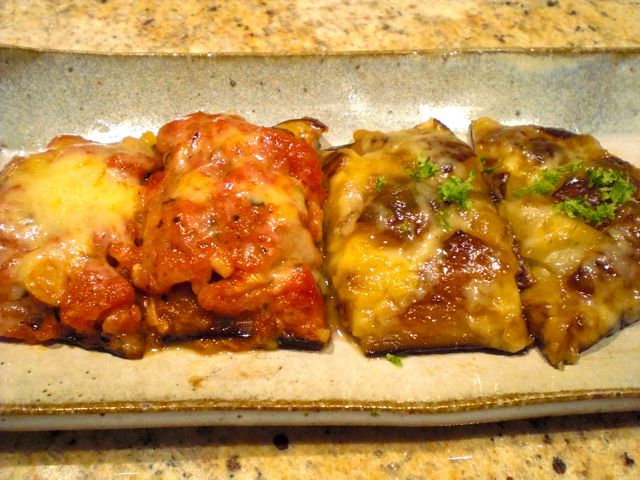
Eggplant gratine two ways; Marinara and Yuzu-miso sauce with cheese

Last time we had a chance to grill outside, I grilled a small Italian eggplant trying to make "yakinasu"  やきなす or Japanese style grilled eggplant but it was not really good. So, when I saw a nice Zebra eggplant in the market, I had to get one. Since It was not feasible to fire-up a grill outside, I asked my wife how she like the eggplant cooked. I got a bit ambiguous answer. So I decided to halve the eggplant and make one in an Italian style with Marinara sauce and cheese and the other half in a Japanese style i.e., "citrus miso dengaku" with cheese, so that I can not go wrong.

I cooked the eggplant in my usual way. I cut the eggplant in half length wise. Then I cut the meat around the edges close to the skin and in cross-hatch pattern but not cutting through to the skin (This is hasten and make cooking uniform). I put about 2 tbs of light olive oil in a frying pan on a medium flame. When the oil is hot and shimmering, I put in the eggplant the cut side down. The eggplant eventually absorbs all the oil. After 1-2 minutes, I put on the tightly fitting lid and turned down the flame to low and let it cook about 10 minutes. The eggplant should be soft and thoroughly cooked with the cut surface nicely brown. I transferred the eggplant halves to a baking sheet (or ramekin) and layered one with Marinara sauce and the other with Yuzu-citrus miso. Then I topped them with grated cheese (I used a mixture of Cheddar and Raclette here but any melting cheese will do) and put them in a 400F oven (I used a toaster oven) for 5 minutes or until the cheese melts.

Marinara sauce: I placed olive oil (1/4 cup), 3-4 cloves of garlic (minced), and red pepper flakes (optional), in a small deep pot on a low flame. When the garlic became fragrant,  I added canned whole tomato, drained and crushed (16 oz can), dried oregano and basil (1/2 tsp, each), salt and freshly ground black pepper. I simmered this sauce for 30 minutes. I tasted and adjusted the salt and pepper. You may want to add a pinch of sugar to cut the acidity.

Yuzu-miso sauce: Mix red miso (3 tbs), sugar (2tbs), and mirin (3 tbs) in a small sauce pan on a low flame. Keep stirring until nice thin saucy consistency is attained (about 5 minutes). I added 1 tsp of dark roasted sesame oil (optional) at the end and mix well. Off heat, I add Yuzu juice (from a bottle) (1 tsp) and zest of one lime (using a micrograter) or just lime or lemon juice and zest.

In the above picture, on the left is the eggplant with Marinara sauce and on the right is the one with Yuzu-miso sauce. I garnished the Yuzu-miso eggplant with the zest of a lime and, if I had fresh basil, I would have garnished the marinara sauce side with chopped basil. You can have this with wine, beer or sake. We had this with Poggio Il Castellare Sant Antimo Cervio Cabernet Sauvignon 2007, which taste  more like California cab rather than Super Tuscan, but it went very well with this dish nonetheless.

Sunday, October 3, 2010

Auntie N's no-crapple scrapple with Pennsylvania Dutch sweet coleslaw スクラップルとペンシルバニアダッチコールスロウ

We were expecting a visiting dignitary to come to "Chez Norio" recently, Jon of EOITWJ, but things did not work out and we will have to wait for another chance. In any case, said dignitary is quoted as saying  "Now Scrapple, it's cool because you know it's full of crap, or rather is made of nothing but crap, and that's expected". In response to this statement, I let him know of the existence of Auntie N's no-crapple scrapple. So, we thought it would be most appropriate that our visitor should try her scrapple. Since it is a two-day process to make no-crapple scrapple and weekends are the only time she can do it, I asked my wife to make her specialty before we learned that our visitor could not make it. Actually, she made the best scrapple ever.

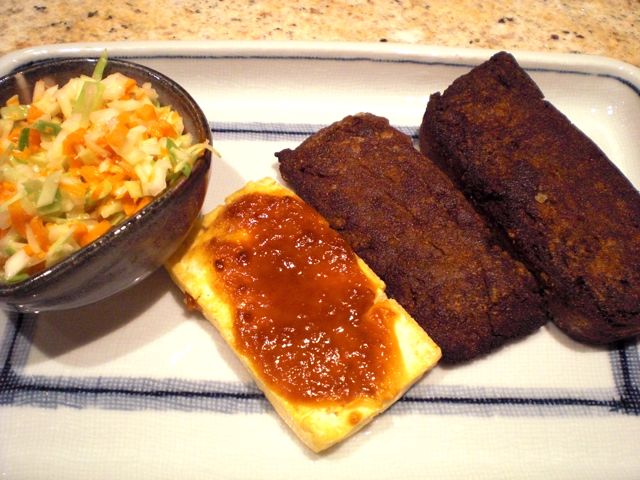
We had this as a part of an eclectic series of small dishes for the evening (mostly leftover from the weekend). The other small dishes included Yakitori-style drummetts and wings, and stewed daikon, pork spare rib (left over from the scrapple making) with the addition of tofu and broccoli. Since I had only a small amount of tofu left after the daikon, pork spare rib, tofu and broccoli dish, I made it as tofu dengaku (in a toaster oven) to use it all up. I served it with the scrapple and Pennsylvania Dutch sweet coleslaw (it may look too eclectic but, at least, it has about the same dimensions as the scrapple) as shown below.
This was the best scrapple ever! Nice mix of spices and porky flavor. Jon, you missed a good one. But don't worry there is more where that came from.
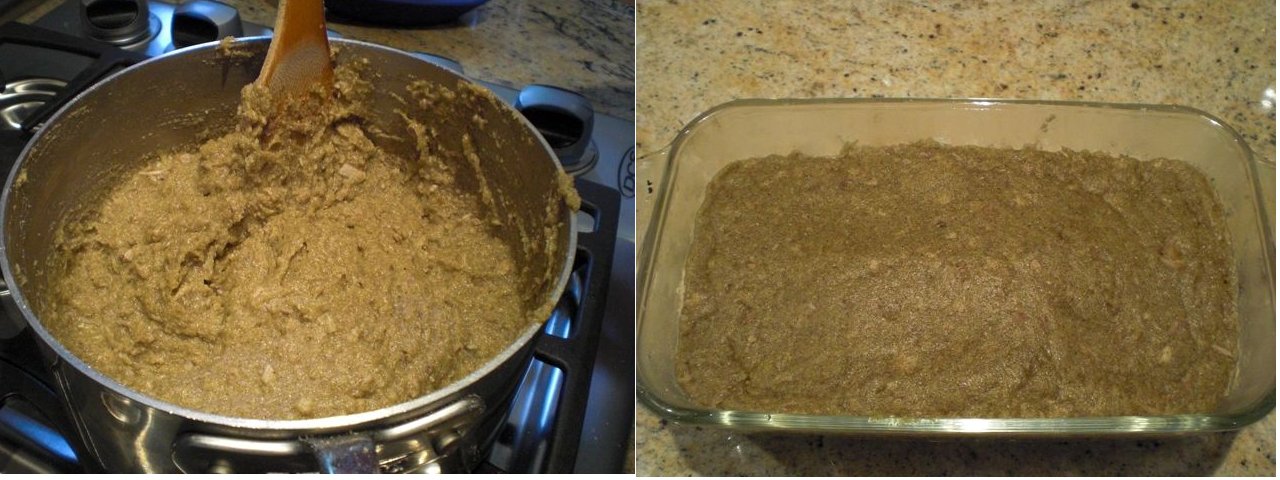
Look at this lovely mud/sewer water color. The addition of buckwheat flour really added flavors and made the color authentic but since this is no-crapple scrapple, no mystery meat or crap is in this one.

Friday, January 15, 2016

Chicken tenderloins with miso glaze 鶏ささみの味噌焼き

Often, our eyes are bigger than our stomach. We frequently buy food thinking we will cook it over the weekend but end up not cooking it because we either have too many other dishes for the week or we run out of time. This was one such weekend. Although I had bought split chicken breasts (bone in skin on), we did not cook it. Instead, I removed the meat from bone and separated the tenderloins from the breast meat. I marinated the tenderloins in sake and the breast meat in shio-koji, soy sauce and mirin. I placed the two packages in the meat drawer of the refrigerator. I cooked this chicken tenderloin dish on a subsequent weekday evening as a starter.


I often grill the tenderloins with pickled plum paste and perilla but this time I used sweet miso glaze.


I also garnished it with chopped chives.

Miso glaze: This is similar to the sauce I use for dengaku. I mixed miso, sugar, sake and mirin with grated ginger and a splash of sesame oil and mixed it in a small sauce pan over the low heat until everything was combined and the consistency was spreadable but not runny.

I skewered the tenderloins and grilled them in the toaster oven for 5 minutes on each side. I checked for doneness then smeared the miso glaze on one side and put it back under the broiler until the miso glaze bubbled and became fragrant.

This was nothing special but perfect starter for the evening.

Monday, August 26, 2013

Daikon and Pork filet with sweet miso sauce 大根と豚のヒレ肉の田楽風

This is mostly to show the small trapezoid-shaped bowels (one of the new bowls) we acquired in New York.  I did not have the time or energy to make anything special. I had some small daikon rounds which were leftover from making "katsuramuki" 桂剝き for the daikon Sashimi garnish  (center portion cannot be used for this). I prepared this dish rather than discarding the leftover rounds. I also found baked pork filet in the refrigerator. I decided to make sweet miso sauce and grill them in the style of "dengaku" 田楽.


Miso sauce: I used white miso (2tbs) with enough mirin to make saucy consistency. I tasted it and added 1 tsp of sugar.

I first warmed up the daikon rounds (this was previously simmered in dashi broth) and thickly cut slices of the baked pork filet in microwave oven. I then smeared the miso sauce on one side and placed just under the upper broiling unit of the toaster oven and broiled it until the miso sauce browned and became fragrant. I added blanched broccoli and sprinkled with micro grated lemon zest.

The bowls are a nice small size. I have many round ones (deep and shallow) and square ones but this one has an interesting shape. Grilled sweet miso is wonderful stuff. The dish was more than Ok for a sip of sake.

Sunday, March 22, 2015

Yuzu restaurant Omakase 日本料理店柚子おまかせ

We had some business to attend to in downtown Bethesda and since the timing was perfect, we had a chance to go back to the Japanese restaurant "Yuzu" 柚子 after almost 2 years. On our last visit,  it was still in its “soft-opening”. Again we went for "Omakase" お任せ ($80, the smallest one offered since we tend to get full very quickly). When we sat down and greeted Chef "Yoshi Ota", he remembered us despite our 2 year absence and mentioned the post we wrote about our experience at the restaurant 2 years ago. We were honored.

The sake menu has improved but is not extensive. Chef Yoshi again lamented the fact that he had to go through the Montgomery county liquor board to purchase sake which makes it difficult to have an extensive list. We choose the tried-and-true Suigei junmai 酔鯨純米. He served the sake in a stem-less white wine glass so that we could swirl and enjoy the aroma. Suigei has a pleasant non-yeasty nose with slight green apple taste. On this occasion, this sake tasted a bit sweeter than I remembered. Towards the end, we (I, in particular) wanted a bit more sake to complement the last dishes and had “Kikusui genshu” 菊水原酒 which came in a 200ml “cup”. We had this first at “Sakamai” 酒舞, New York some years ago in a “Genshu” tasting. This time, it seemed to have an almost a turpentine flavor.

The starter was "nuta" ぬた of tuna, avocado and cream cheese wrapped in nori. Sweet, nutty and sour "nuta" sauce (miso paste, vinegar and sugar) was a good contrast of flavor and texture to the tuna, avocado (nicely ripened) and cream cheese.

Photo Mar 12, 5 44 07 PM

Next came a very nice refreshing plate of scallop carpaccio. Thin slices of raw scallop were placed on a bed of wakame seaweed 若芽, They were accompanied by almost jewel-like colorful mini-tomatoes (with the skin removed of course), thinly sliced cucumber and red radish. A yuzu (Japanese citrus) dressing completed the dish. The combination of gentle sweetness of the scallops with the refreshing tang of the tomatoes and yuzu dressing was very balanced; a beautiful and tasty dish. The delicate interplay of tastes and texture set the tone for the rest of the dishes that followed.

Photo Mar 12, 5 51 23 PM

This is another raw fish dish of “hirame” (sole or flat fish) and salmon. The hirame tasted cured with a nice texture. I thought it was kelp cured but Chef said it was salt cured. It was served with a garnish of fried onion bits, finely chopped green scallion, and pine nuts. The dressing was white truffle oil and soy sauce (I am sure this is “sashimi” soy sauce). Each morsel was a progression of taste and textures that was sublime. First the taste and texture of the fish, followed by the crunch and mild burst of flavor from the fried onion bits, then another crunch and the flavor of pine nuts. All packed on one small slice of fish and suffused with the flavor of the truffle.

Photo Mar 12, 5 59 42 PM

When I saw Chef Yoshi preparing the next dish, I thought  this was an eggplant dengaku 茄子の味噌田楽 but, to my surprise, this was a miso marinated piece of “Gindara” 銀鱈 (sable fish or black cod), grilled with miso and meat sauce 肉みそ on the top. Gindara has a very moist nice flavor and texture similar to Chilean sea bass. The miso sauce had a nice nutty and salty taste.  The combination of the succulent tender fish with the miso based meat topping made this a remarkably comforting dish. The size of the portion was quite generous allowing us to almost wallow contentedly in the pleasure of each bite. This was a dish to savor. Chef Yoshi mentioned, it would have been “perfect” with a bowl of white rice but it went very well with cold sake we were having.

Photo Mar 12, 6 07 13 PM

Next came ”Amadai tatsuta age アマダイの竜田揚げ” or deep fried marinated tile fish which was served with ponzu sauce with graded daikon and red pepper flakes.

Photo Mar 12, 6 17 27 PM

We immediately started digging in. Chef Yoshi thought this dish was not particularly photogenic and added several fried green beans. By then, only two pieces remained.

Photo Mar 12, 6 19 18 PM (1)

Next, we proceeded to the sushi course. Chef Yoshi first prepared a real wasabi rhizome 山葵大根 (grated on a traditional shark skin grater). I did not take pictures of all the sushi (I got too busy eating). Chef Yoshi did a great job with the “sushi” progression starting with hirame “engawa” ヒラメの縁側 (#1), meat of dorsal fin, which happens to be my ultimate favorite. I love the firmness of this part of hirame. This was followed by botan ebi shrimp 牡丹エビ which was sweet with a nice “nettori” ねっとり texture (hard to translate to English) . Then we progressed to oiler red meat fish including salmon (#3), fatty tuna (straight) which was immediately followed by aburi tuna 鮪の炙り (#4). The same tuna tasted quite different and showed nice contrast. Although Chef Yoshi commented that the quality of Maine uni he had was not of the quality of California uni, the gunkan 軍艦 of salmon roe and sea urchin was great (#5). This combination is my wife’s absolute favorite. As in any good sushi course, the second to the last dish was “anago” 穴子 sea eel with “Tsume” ツメ sauce (#6).

Sushi composit

Almost like desert, the last one was a Japanese sweet omelet which was still warm. Perfect last item.

Photo Mar 12, 7 03 00 PM

At this point, we were presented with a desert menu but we were really full and declined. The meal was more than complete without it. The sweet omelet was in effect a desert enough for us. We really enjoyed this omakase dinner. Yuzu has been open for 2 years and seems to have hit its stride with things falling nicely into place. We were struck by the subtle complexity of texture and taste built seamlessly into each dish reflecting the unique artistry of the chef. The evening was not particularly busy and we got all the attention of Chef Yoshi—which we selfishly enjoyed immensely .

Tuesday, November 26, 2013

Restaurant Kappa in San Francisco 小料理屋河童

I learned about this restaurant sometime ago on a previous trip to San Francisco. On that visit we stayed at the Hotel Kabuki in San Francisco Japan town and tried to go to this restaurant but we could not get a reservation. Instead, we went to Ino sushi 井乃鮨. Later we learned our substitute choice was a “Sushi bullies” place (aka sushi Nazi) which we did not know at that time but had a good dinner nonetheless. This time I planned ahead and made a reservation via email way ahead of time. This place must rely on a regular clientel or "Jouren" 常連客 or word-of-mouth for most of their business. It is an “if you don’t know exactly where you are going you will never get there” type of place. Even with the specific instruction that it is located on the second floor of the building at the corner of Post and Buchanan* (picture below left) you will not find it. This is because prior to opening at 6pm, the front of the restaurant (picture below right) is totally hidden behind locked, nondescript, unmarked double doors with absolutely no signage. On our previous visit, even though we did not have a reservation and would be eating elsewhere, I just wanted to see where it was located. We wandered around for quite some time but never found it. This time, luckily we arrived a 6:00 PM and there was a small hand written cardboard sign with “Kappa” on it. Behind the double door we found a small vestibule and a nice black Japanese style sliding door with a lantern with “koryouri Kappa” 小料理 かっぱ on it (picture below right).

*The first floor of this building has a family style Japanese restaurant called "Sanppo" 三宝. When we lived in the Bay area many years ago, we used to stop by for a late supper after driving back from all-day skiing at Lake Tahoe.
outside comp
We opened the sliding door, and were welcomed by a smiling kimono-clad proprietor (wife) into a small but nice space. The restaurant's decor was dominated by a white wood counter which probably seats 10 people (picture below left) and a small separate room which seats 3 more at a table. The husband was the chef behind the counter and no other helpers were in sight. In the small triangular space behind our seats was a flower arrangement displayed (picture below right) which was a very nice touch. It was very quiet (there was only one other couple in the separate room).
Kappa interior
They had quite an extensive sake list. For the first round, I had Kikusui 菊水 and my wife kamotusru arabashiri 加茂鶴あらばしり. After some conversation with the couple, we found out that both were from Hokkaido like myself; the “Mrs.” was from Asahikawa 旭川and the “Mr.” from Akabira 赤平. Since we established the Hokkaido connection, I next chose Otokoyama 男山 which is brewed in Asahikawa (unfortunately this was not a particularly great sake).  We also had Dassai 獺祭 and Born 梵 to accompany other dishes.
IMG_1095
We had asked to have an omakase tasting course お任せ. So, we did not have to order. Everything just came, one after the other in a well timed fashion.

The first dish was clear soup with seared scallop and kaiware カイワレ大根 and yuzu ゆず. To me, this is a bit unusual for an opening since we usually start with sashimi at an izakaya but this is not an izakaya it was more like a small ryoutei.料亭 or traditional Japanese course only restaurant. The soup had a lot of umami (or “dashi ga kiiteiru” 出汁がきている).
IMG_1098
The next was crab in vinegar dressing or Kani no sunomono カニの酢の物. Good sized Dungeness crab and snow crab meat was dressed in sweet vinegar with sesame and cucumber.
IMG_1099 (2)
The third dish was “tuna no nuta” マグロのぬた, yubiki tuna 湯引き鮪 with blanched scallion and wakame seaweed were dressed in miso vinegar dressing..
IMG_1100
And then came the assortment of 15 (no mistake, fifteen) small dishes called “Hassun” 八寸. Traditionally, many small items are placed in an 8-sun square plate (“sun” 寸 is an old Japanese measurement unit which is about 3cm, so 8-sun is 24cm or about 10inch square). As far as I can remember, the left row from the bottom are hamachi teriyaki はまちの照り焼き, roasted duck breast 鴨胸肉のロースト, karashi-mentaiko wrapped in squid 辛子明太子のイカ巻き, dashi-maki omelet 出汁巻き. The right row from the top are corn kakiage トウモロコシのかき揚げ, fried scallop ホタテのフライ, tuna kakuni マグロの角煮, simmered gan-modoki がんもどきの煮つけ, and simmered kabocha かぼちゃの煮つけ. In the center 6 items from the left bottom are smoked salmon with mountain yam 燻製サーモンの山芋載せ (in the small dish), asparagus in sesame dressing アスパラの胡麻和え, senmai zuke of radish 千枚漬け, simmered small scallop ひも付きホタテの煮もの, boiled “Kuruma” prawn 茹でクルマエビ and eggplant with dengaku sauce 茄子の田楽. All these were presented on top of a fresh wasabi plant leaf. This was indeed our nirvana; small morsels of different tastes between sips of sake.
IMG_1101 (2)
At the wife's advice, we nibbled on the stalk of fresh wasabi plant which had a nice fresh taste but was not as hot as wasabi itself. We had consumed quite a bit of sake to finish these dishes.

Now came the otsukuri お造り or sashimi 刺身. From the left to right; a nice piece of hamachi はまち, maguro 鮪, kanpachi カンパチ, and California Uni (we were told was from off the coast of Santa Barbara, and is said to be the very best and indeed it was). Everything was great but the uni was particularly great and we asked for an additional serving to go with more sake.
IMG_1103
The shime  〆 course was three good pieces of nigiri にぎり; eel, smoked salmon and tuna. The rice was not as well seasoned as it could have been and the rice balls appeared to be made in a mold rather than done by hand.

At this point, we had drunk enough and were quite satiated.  But here came the dessert. From left to right in the picture below; mizu-yokan水羊羹, ripe pineapple, strawberry, mango and kinako-coated warabi mochi わらび餅.
IMG_1104 (2)
This was not the end of the desert and we also had strawberry/raspberry sorbet.
IMG_1105 (2)
This was quite an extraordinary experience. We felt like we were back in Japan. The place was quiet and we enjoyed interesting conversations with the chef and his wife. We thoroughly enjoyed the evening.

Information on Kappa.

Restaurant Kappa 小料理かっぱ
1700 Post St., Suite K
San Francisco, CA 94115
(On the 2nd floor of the building located at the corner of Buchanan St. and Post St.)
(415) 673-6004 - Call for reservations after 4:30pm
http://www.kapparestaurant.com/english.htm