I had an excess of ripe avocados. I asked my wife if she could use some. As she is a devotee of muffins, she found this avocado bacon recipe on-line. Since we also had an excess prosciutto, she modified the recipe to avocado prosciutto muffin. This turned out to be a great and unique muffin, a complete breakfast.
This is the cut surface just cooled down to room temperature after coming out of the oven, You can see the melting cheese, avocado and prosciutto. Unfortunately, this is a rather rich muffin with eggs and cheese as well.
Ingredients (makes 12 muffins):
3 cups flour (#1)
2 tbs baking powder
3/4 tsp salt
4 1/2 tsp sugar
1 pinch cayenne pepper (#1)
1 1/2 cup grated cheese; we used a mixture of smoked gouda, sharp cheddar and pepper jack cheeses (#2).
2 tbs chopped chives
4 slices prosciutto, cut into small pieces and cooked until crispy (#3).
113 grams (whole stick) of unsalted butter melted
2 eggs
1 1/2 cup milk
1 avocado, stone and skin removed and cut into small cubes (coated with lemon juice to prevent discoloration) (#4)
Directions:
Combine the flour, baking powder, salt, sugar and cayenne in a bowl. Shred the cheeses. Cook the prosciutto until crispy. Cut up the avocado and coat with lemon juice so it doesn't discolor.
In another bowl combine the egg, butter and milk. Add the liquid ingredients to the dry ingredients and mix until combined. Fold in the prosciutto and avocado #5. Scoop into a heavily greased muffin tin. Cook in a 400 degree oven for 18 to 20 minutes #6. Let cool for 5 minutes and remove from the muffin tin.
These muffins are a meal in themselves. They are decadently delicious. We would never have considered adding avocado to a baked good but it maintains it's shape and consistency. It adds a nice moist texture element. The smoked cheese did not melt completely while the other cheeses amalgamated into the bread. This added yet another texture element and burst of flavor. We will be making these again.
Tuesday, September 24, 2019
Saturday, September 21, 2019
Maitake and chikuwa kinpira 舞茸と竹輪のきんぴら
Since I got maitake 舞茸 (hen of the woods) when I got matsutake 松茸 from Oregon mushrooms, this is the second dish I made from the maitake. This is loosely based on a recipe on-line. I made this as a first "otoshi" appetizer of the evening. I also served dried and seasoned squid strips or "saki-ika" さきいか.
This is a perfect dish for sake. Fish cake and maitake are a good combination with contrasting texture.
Saki-ika is the last remaining from the package I opened a few days ago. This is a good very popular drinking snack in Japan. We think this goes best with Bourbon and water but sake will do as well.
Ingredients:
One package (1/4 lb) maitake, torn into bite sized pieces, rinsed in water and excess water removed by a salad spinner (#1).
One medium carrot, peeled, sliced on the bias and cut into julienne (#2)
One package (six) small yaki-chikuwa 焼き竹輪 fish cakes, thawed, one cut into 4 long strips (#3)
1 tsp of peanut oil and a splash of dark roasted sesame oil
A pinch of dried red pepper flakes (as much as you like)
1 tbs mirin
1 tbs soy sauce
Roasted white sesame for garnish
Direction:
In a non-stick frying pan on medium flame, add the peanut oil with a dash of sesame oil and add the red pepper flakes and let it cook a little until fragrant.
Add the carrot and the mushroom and sauté for several minutes until the mushrooms start showing few brown spots (#2).
Add the chikuwa fish cake (#3) and keep sautéing for a few more minutes.
Add the mirin and then soy sauce and braise until the liquid is almost gone. Taste and adjust the seasonings (I added a bit more soy sauce).
Serve immediately or at room temperature with a garnish of roasted white sesame.
The maitake has a meaty texture and earthy flavor. The chiku-wa is soft and slightly sweet. The contrast in textures is very intriguing.The red pepper flakes gave a slight heat to the basic "kinpira" flavor of soy sauce and mirin. Everything comes together. This is a good starter. We had this cold later and it was still quite good.
This is a perfect dish for sake. Fish cake and maitake are a good combination with contrasting texture.
Saki-ika is the last remaining from the package I opened a few days ago. This is a good very popular drinking snack in Japan. We think this goes best with Bourbon and water but sake will do as well.
Ingredients:
One package (1/4 lb) maitake, torn into bite sized pieces, rinsed in water and excess water removed by a salad spinner (#1).
One medium carrot, peeled, sliced on the bias and cut into julienne (#2)
One package (six) small yaki-chikuwa 焼き竹輪 fish cakes, thawed, one cut into 4 long strips (#3)
1 tsp of peanut oil and a splash of dark roasted sesame oil
A pinch of dried red pepper flakes (as much as you like)
1 tbs mirin
1 tbs soy sauce
Roasted white sesame for garnish
Direction:
In a non-stick frying pan on medium flame, add the peanut oil with a dash of sesame oil and add the red pepper flakes and let it cook a little until fragrant.
Add the carrot and the mushroom and sauté for several minutes until the mushrooms start showing few brown spots (#2).
Add the chikuwa fish cake (#3) and keep sautéing for a few more minutes.
Add the mirin and then soy sauce and braise until the liquid is almost gone. Taste and adjust the seasonings (I added a bit more soy sauce).
Serve immediately or at room temperature with a garnish of roasted white sesame.
The maitake has a meaty texture and earthy flavor. The chiku-wa is soft and slightly sweet. The contrast in textures is very intriguing.The red pepper flakes gave a slight heat to the basic "kinpira" flavor of soy sauce and mirin. Everything comes together. This is a good starter. We had this cold later and it was still quite good.
Wednesday, September 18, 2019
Nori and butter fried noodles 海苔とバターの焼うどん
This was sort of our (mostly my wife's) invention. One evening, we needed something to finish the meal (shime〆). We found leftover precooked very thin udon noodles or "Ito udon" 播州糸うどん, which we happened to have since we had "cold pasta with fresh tomato sauce" earlier. My wife suggested that we simply fry it in butter and soy sauce (reminiscent of how she adds butter and soy sauce to her rice). The reasoning being 'if butter and soy sauce taste good on rice why not noodles?' I also added strips of seasoned nori. I added the nori as the noodles were cooking not as garnish.
The garnish I used was finely chopped chives.
The udon is extra thin and the nori is well incorporated into the noodles.
This is not a recipe. Just add a thin pat of unsalted butter to a non-stick frying pan on medium flame, add cooked udon noodle, fry for a few minutes, add strips or hand-crushed seasoned nori or "ajituske nori" 味つけのり and keep frying. then add a small amount of soy sauce to finish. The amount of the ingredients and seasoning is totally arbitrary.
This is a simple and very satisfying dish. Perfect for the shime at the end of the meal. This has become our "go-to" dish whenever we have left over udon. As a variation, I also used "nori tuskudani" 海苔佃 which was ok but did not particularly add much.
The garnish I used was finely chopped chives.
The udon is extra thin and the nori is well incorporated into the noodles.
This is not a recipe. Just add a thin pat of unsalted butter to a non-stick frying pan on medium flame, add cooked udon noodle, fry for a few minutes, add strips or hand-crushed seasoned nori or "ajituske nori" 味つけのり and keep frying. then add a small amount of soy sauce to finish. The amount of the ingredients and seasoning is totally arbitrary.
This is a simple and very satisfying dish. Perfect for the shime at the end of the meal. This has become our "go-to" dish whenever we have left over udon. As a variation, I also used "nori tuskudani" 海苔佃 which was ok but did not particularly add much.
Sunday, September 15, 2019
Baked maitake オーブン舞茸
When I ordered fresh matsutake from Oregon mushrooms, the shipping was almost the same as the price of the matsutake. So I decided to include some "mai-take" 舞茸 or "Hen of the woods" to better even out the costs between the product I was buying and the shipping. One evening, I came up with this dish which is not particularly based on any recipe. We like this mushroom. Especially the large ones. The stem or base part almost tastes like meat when cooked. I separated/tore one large bunch into small bite sized pieces and cooked them in an aluminum foil pouch in the toaster oven.
To add some charred taste after it cooked/steamed in the pouch, I opened the pouch and put the mushroom on the surface and broiled it for 10 minutes so that the edges of the maitake got charred a bit.
This is quite good and nice meaty taste and texture. I used whatever was available when I made this. Since I just winged it the ingredients shown below are my guess.
Ingredients:
One package of fresh maitake (1/4 lb), torn by hand into bite size pieces.
Onion, previously cooked in the Weber cut into small pieces (this was cooked by taking a whole onion with the skin still on, piercing it several times to prevent the onion from exploding as it cooked and wrapping it in aluminum foil), (I think raw onion will do as well)
Previously baked garlic, one clove (or thinly sliced raw garlic)
Salt to taste
Butter, unsalted, two pats
Chives for garnish
Directions:
Place all ingredients except for the salt and butter in the middle of a sheet of aluminum foil. Top it with the butter and sprinkle salt.
By folding four ends, make a pouch and crimp the opening.
Place the pouch in the 350F convection toaster oven for 30 minutes.
Open the pouch, mix, and expose the maitake pieces and broil (500F) for 10 minutes or until the surface of the maitake charrs a bit.
Garnish with finely chopped chive.
For an instant dish, this was very good. I could have made a mixture of butter, miso and mirin and added that as another possible variation. The maitake especially the stem parts have a good meaty texture and earthy "umami" flavor. This may be perfect for serving to our vegetarian friends.
To add some charred taste after it cooked/steamed in the pouch, I opened the pouch and put the mushroom on the surface and broiled it for 10 minutes so that the edges of the maitake got charred a bit.
This is quite good and nice meaty taste and texture. I used whatever was available when I made this. Since I just winged it the ingredients shown below are my guess.
Ingredients:
One package of fresh maitake (1/4 lb), torn by hand into bite size pieces.
Onion, previously cooked in the Weber cut into small pieces (this was cooked by taking a whole onion with the skin still on, piercing it several times to prevent the onion from exploding as it cooked and wrapping it in aluminum foil), (I think raw onion will do as well)
Previously baked garlic, one clove (or thinly sliced raw garlic)
Salt to taste
Butter, unsalted, two pats
Chives for garnish
Directions:
Place all ingredients except for the salt and butter in the middle of a sheet of aluminum foil. Top it with the butter and sprinkle salt.
By folding four ends, make a pouch and crimp the opening.
Place the pouch in the 350F convection toaster oven for 30 minutes.
Open the pouch, mix, and expose the maitake pieces and broil (500F) for 10 minutes or until the surface of the maitake charrs a bit.
Garnish with finely chopped chive.
For an instant dish, this was very good. I could have made a mixture of butter, miso and mirin and added that as another possible variation. The maitake especially the stem parts have a good meaty texture and earthy "umami" flavor. This may be perfect for serving to our vegetarian friends.
Thursday, September 12, 2019
Sashimi salmon four ways 刺身用のサーモン
This salmon was not fatty but was quite good. I arranged it into the shape of a rose.
The boiled octopus was sliced thinly in a wavy cut as usual. I made sumiso sauce to my wife's specification (not too vinegary). I thought it was a bit more chewy than the octopus we usually get from the Japanese grocery store but it tasted very fresh (not fishy at all).
The second salmon sashimi dish was very similar to what I posted before. Just in case we needed some spiciness, I served it with Japanese red pepper paste (from a tube).
The dressing was a mixture of lemon juice, sesame oil, soy sauce and garlic. I mixed in finely chopped chives as well.
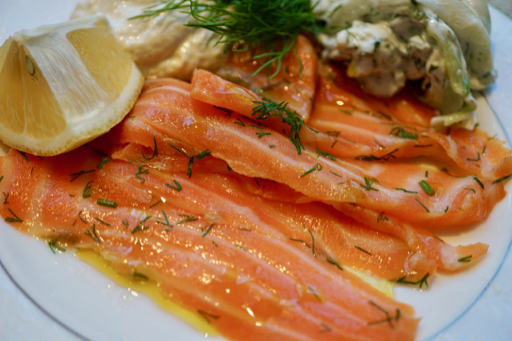
The third dish was instant Gravlax. Instead of vodka I used gin this time. It added, of course, a gin-flavor. I thought this might be too strong but my wife liked it. Since we ate it all before I remembered to take a picture I am using "stock footage" by posting a previously posted old picture.
Since the gravlax and Russian marinated salmon stayed eatable longer than sashimi, we enjoyed these two items for a few days and finally finished the salmon sashimi block. This was a tough job but somebody had to do it.
Subscribe to:
Comments (Atom)