Thursday, February 10, 2011

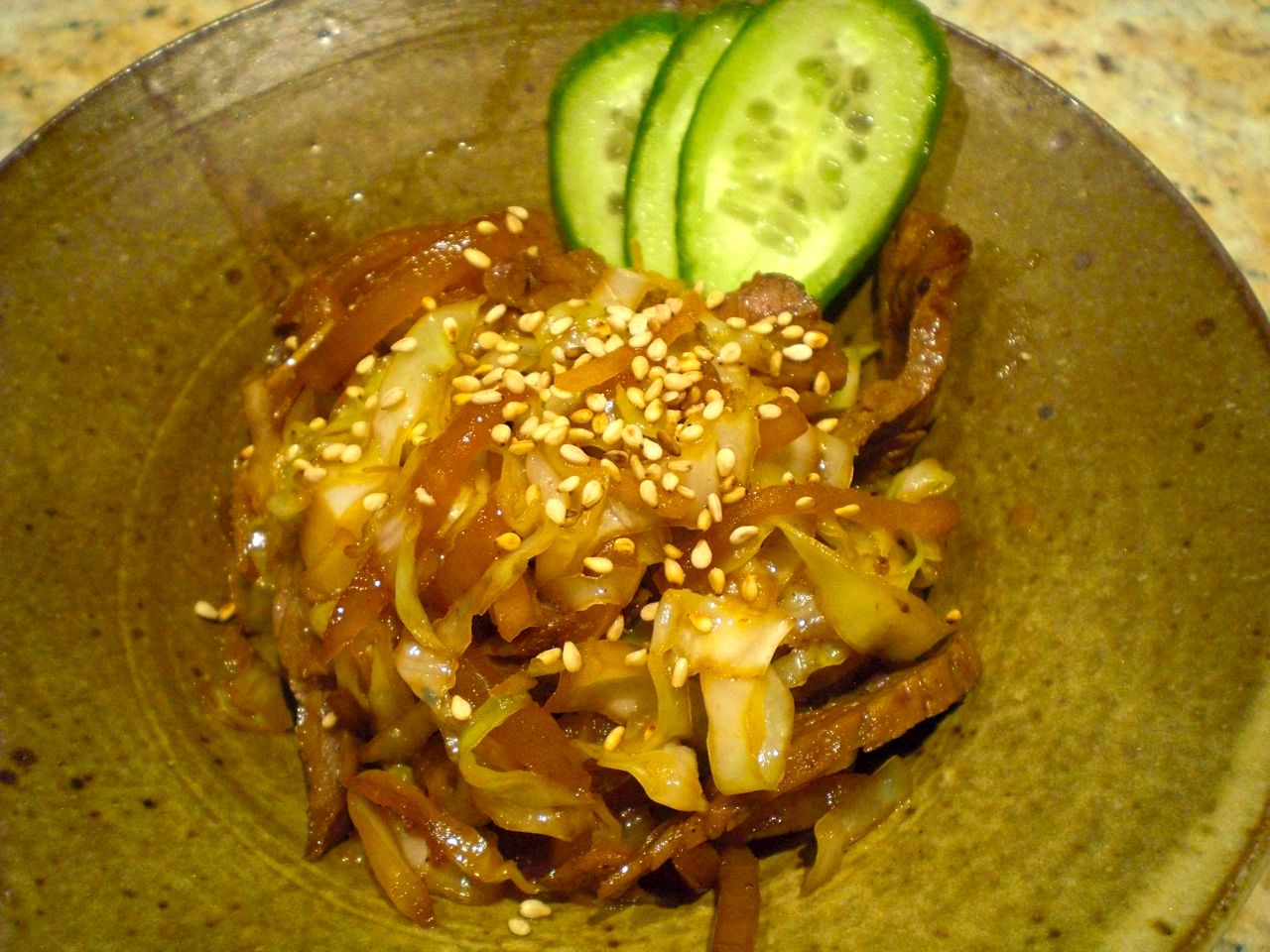
Braised beef, cabbage and fennel in butter and soy sauce 牛肉とキャベツの炒め物

I took this picture when I served this dish but a few days later when I tried to write up the recipe, I couldn't remember how I made it for a moment--sometimes I surprise myself. This was one of those made-from-leftover type quick and small dishes.  Looking at the picture carefully, I remembered that I used leftover skirt steak, cabbage and fennel. Not really post-worthy but here we go.

I thinly slice left-over skirt steak across the grain, cut cabbage (after removing the thick veins) into thin strips and thinly sliced fennel. I put a small amount of vegetable oil and a dash of dark roasted sesame oil in a pan and sauteed the vegetables for several minutes on a high flame. I then added the steak, mirin and soy sauce and braised for few more minutes. I garnished with roasted white sesame seeds.

This is a nothing small dish but still pretty good especially with sake.

Tuesday, February 8, 2011

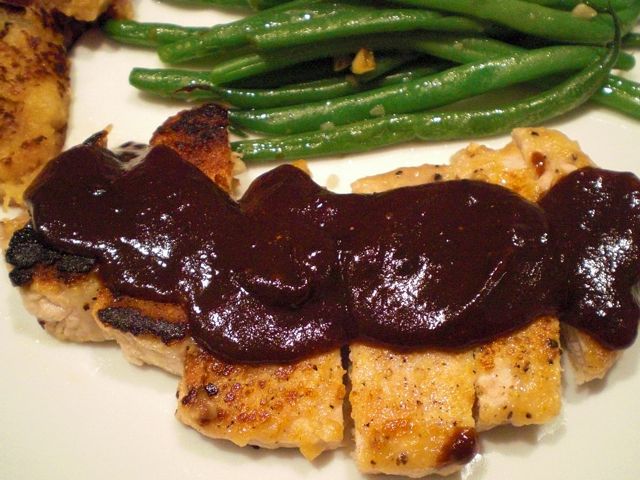
Pork saute with red miso sauce 豚肉のソーテー赤味噌ソース

This is part of a whole pork loin we bought on sale a few days ago. From this one piece of meat, I made six 1 inch thick chops, an oven roast and a Sino-Japanese style pot roast. This dish is made with 2 of the chops and served with red miso honey sauce.

Red miso sauce (for 2 serving as shown above): I used red miso (1 tbs) which is mostly made of soybeans and is rather salty and has a somewhat bitter taste. I added warm dashi broth (2 tbs) and dissolved it over a very low flame. When the miso dissolved, I added sugar (1 tsp) and honey (1 tsp). I then added, a good ol' American ketchup (1 tbs). I kept stirring until it came to a simmer and reduced to a thick saucy consistency. I tasted and adjusted the seasonings (slightly more sugar). If it gets too thick, add a bit more dashi, sake, or water. I finished the sauce by incorporating a small amount of butter (1 tsp).

Pork chops: The chops were marinated in sake for a few days. This keeps the meat from spoiling too quickly as well as making the porky flavor mild. After blotting the moisture from the surface of the chops, I seasoned with salt and pepper and dredged in flour. I fried them in a small amount of vegetable oil on a medium flame to make both sides brown (2-3 minutes on each side) and then turned the flame down to complete cooking (another 4-5 minutes).

Since we are eating this with chopsticks, I pre-cut the pork chops and put on the sauce. For the accompaniment, we had nice French green beans (much tastier and skinnier than regular green beans), briefly boiled in salt water (still crispy) and then sauteed in butter with finely chopped shallot and garlic seasoned with salt and pepper. I also served leftover mashed popatoes reheated.  My wife made these a few days ago from boiled red potatoes seasoned with creme fraiche and soy sauce. (Don't ask me how she came up with this combination but it tastes pretty good.) I made this into a sort of a potato pancake. I simply pressed the mashed potatoes into a thin disk in a small non-stick frying pan with melted butter. I fried one side until browned and flipped it over to brown the other side.

Everything went very well. The red miso sauce has a salty nutty flavor and gentle sweetness. The slight bitterness of the miso goes well with the richness of the pork. Ketchup also adds to the dimension of the sauce and final addtion of butter made it richer.


We had this with Casali di Bibbiano Argante Toscana Rosso Red Blend 2006. This is a Super-Tuscan made of no Sangiovese but Cabernet Sauvignon (70%) and Merlot (30%). It tastes more like a good California cab. This is very nice red which went well with the pork and the red miso sauce.

Wine Spectator gave 91 score with a comment; "Blackberry jam and sandalwood aromas, with fresh herbs. Full-bodied, with velvety tannins and jammy fruit. Tannic and rich. Cabernet Sauvignon and Merlot. Best after 2011."(ws)

Sunday, February 6, 2011

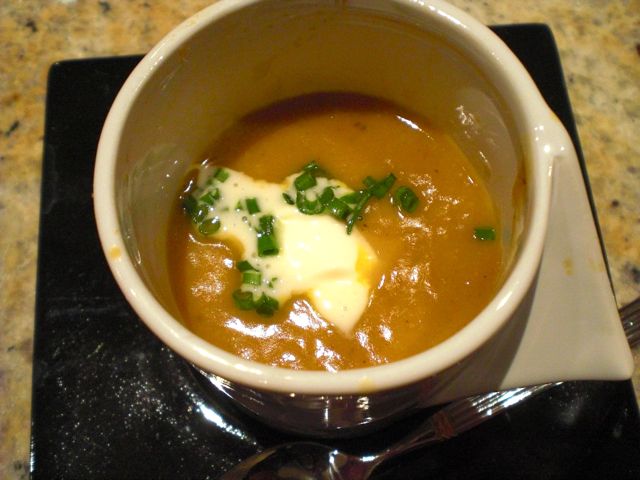
Chestnut and parsnip soup 栗のポタージュ

This is a very interesting soup/potage and this can be a very good starter dish. Here we served it in a demitasse cup.

This was made by my wife. The soup is made with peeled and boiled chestnuts sold in a jar from France. (With the failure I experienced trying to use chestnuts-in-the-shell, we are sticking to pre-processed products like this one when the recipe calls for chestnuts). 

She sauteed onions (one medium, roughly chopped), carrots (2 medium, peeled roughly chopped), and parsnip (4 small, peeled and chopped) for few minutes in butter (3 tbs). She then added the chestnuts (16oz) and low-sodium, fat free Swanson chicken stock (about 4 cups) and simmered for 30 minutes. Using an immersion blender she pureed the cooked mixture. She added more chicken broth to adjust the thickness of the soup and obtain a smoother texture. Then she seasoned with salt and white pepper. She served this garnished with a small dollop of creme fraiche and chopped chive.

The chestnuts give a very interesting sweet nutty taste which is complemented by the parsnips. The chestnuts and parsnips also add to a rich velvety texture of the soup. In all, this is a quite unique and good soup/potage.

Saturday, February 5, 2011

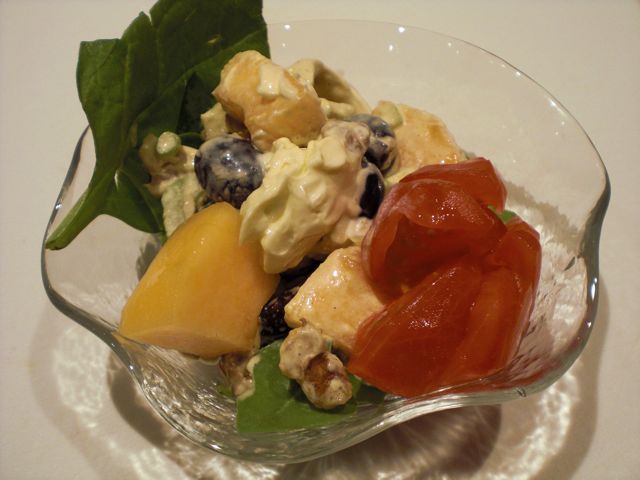
Curry flavored chicken salad with grapes and cantaloupe カレー味のメロンとぶどう入り鶏肉のサラダ


I am not sure what is the origin of the recipe for this salad but it may have been based on a recipe in one of the cookbooks or magazines we have. In any case, it is very interesting since it is curry flavored and uses a combination of yogurt, manogo chutney and mayonnaise as a dressing with the addition of fruit; cantaloupe and grapes.

I made this with left-over barbecued chicken but any cooked chicken will do. I coarsely shredded the chicken by hand. Other ingredients are chopped celery, scallion, and walnuts (pre-toasted). I added grapes and cubes of cantaloupe but the fruit can be added later.  The amount of the ingredients are all arbitrary. Of course, I use seedless grapes.

Dressing: I used 2/3 cup plain yogurt and 1/3 cup mayonnaise (happened to be home-made from pasteurized eggs), Japanese-style curry powder (1 tsp, as much as you like, yogurt reduces the heat of the curry so you can use quite a bit of curry powder). and mango chutney (2 tbs, I  like Major Grey's). Season with salt if needed (I did not).

I served this as one of a small dish with a garnish of baby arugula, Campari tomato and a small dab of home-made mayonnaise. This small salad goes well with any drink. The curry flavor, sweetness of the mango chutney and of the fruit with crunch of walnuts all works well.

Thursday, February 3, 2011

Spoon tofu with green tea salt and salted plum topping 掬い豆腐の抹茶塩と梅肉かけ

I have posted similar dishes before but this one is rather good. Tofu comes in various degrees of firmness such as momenkoshi 木綿ごし (firm) and kinugoshi 絹ごし (soft or silken), the softest kind of tofu is called "zarutofu" ざる豆腐 (tofu scoped up by a basket or "zaru" in Japanese but not pressed) and "sukuitofu" すくい豆腐 or spoon tofu. I happened to get a package of sukuitofu at the Japanese grocery store.
Since this tofu is so soft, you just spoon it into a small bowl. I topped this with green tea salt (a mixture of powdered green tea and kosher salt which I make in batches and keep in the freezer in a sealed container). To make this dish more interesting, I added umeboshi 梅干し or Japanese salted plum. This was from the last batch of home made that my mother sent me. I removed the meat of the umeboshi from the stone. I also included the red perilla leaves from the umeboshi container (salted red perilla adds the color and flavor to umeboshi) . I chopped finely both umeboshi and red perilla together and mixed in a small amount of sake (or mirin if you prefer some sweetness). For good measure, I also added a chiffonade of perilla.

Since the tofu is very soft, you just mix the toppings with the tofu using a spoon and enjoy. It had a perfect amount of saltiness and flavor. You have to have this with sake. We had this with chilled G-sake

P.S. I noticed that the taste of leftover G-sake deteriorates after a few days--losing its fresh clean taste and becoming very cloying, even if the the bottle is tightly sealed and kept in a refrigerator. This means that if we open the bottle, we have to finish it in one sitting. What a hardship!